

Heart researcher inspired to help others following her own experiences with heart problems

A British Heart Foundation-funded researcher has discussed how her own heart conditions and subsequent stroke have affected her and inspired the life-changing research that she leads into sudden cardiac death in children.
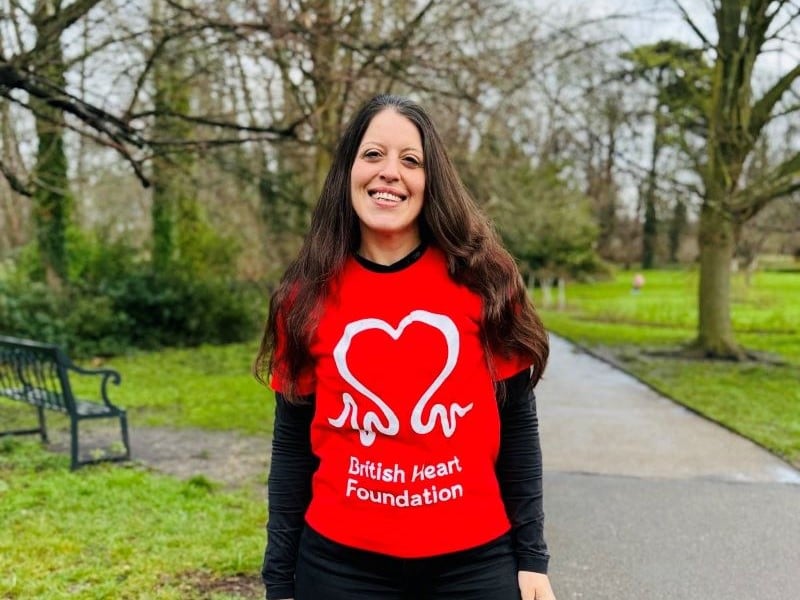
Dr Angeliki Asimaki, Reader in Cardiac Morphology and Sudden Death at City St George’s, University of London, has undergone nine heart operations after being diagnosed with a heart rhythm problem aged 15, and a hole in her heart aged 27.
Despite these challenges, she leads pioneering research into arrhythmogenic cardiomyopathy, a genetic heart condition which is responsible for more than 10 per cent of sudden cardiac deaths in children. She said, “My heart problems are part of my identity. It gives me enormous motivation to solve problems and help patients going through a similar experience.”
Dr Asimaki’s first diagnosis came in 1997 after unexplained episodes of fainting up to five times a day. Doctors found that she had intermittent third-degree heart block, a condition where the electrical signals that cause the heart to beat are blocked from travelling from the top of the heart to the bottom. Doctors told Angeliki that her heart had been stopping for up to 13 seconds at a time.
Life changing experience
Dr Asimaki said “I was fitted with a pacemaker once I was diagnosed, and my heart still relies on it to beat properly about 40 per cent of the time. Because the pacemaker is needed so much, I’ve had five operations to replace the battery.
“My most recent operation was done last year at St George’s, the hospital I work at, and my new pacemaker should last longer than any I’ve had before.
“This experience when I was a teenager left me with no doubt about what I wanted to do with my life. It was a no brainer that I’d become a cardiovascular researcher and find new ways of treating heart conditions and saving lives.”
Dr Asimaki moved from Greece to train as a researcher at University College London, where she got her PhD in cardiovascular medicine. She then moved to Harvard Medical School where she spent 11 years as a postdoctoral associate and then faculty member.
During this time, she experienced a number of new unexplained health problems caused by blood clots, including a pulmonary embolism (a blockage in an artery in the lungs) and deep vein thrombosis. She then had a haemorrhagic stroke at the age of 26, which impacted her right side.
Although initially she lost vision in her right eye and suffered from loss of depth perception, loss of balance, disorientation, dizziness and headaches, fortunately within nine months she regained 75 per cent of her vision.
An undetected condition
In 2009, the source of these problems was found during surgery to replace her pacemaker. Doctors identified a hole between the two upper chambers of her heart, known as an atrial septal defect.
Dr Asimaki said “I had been living with this condition undetected my whole life. It greatly increased my risk of blood clots and was linked to all the health problems I had been experiencing. I had open heart surgery to close the hole.
“This condition is usually spotted at a young age, when doctors can prevent the problems that I had. But, by the time I was diagnosed, my heart had changed shape because of the hole, as it forced the right side of my heart to work harder than it should. This resulted in heart failure and atrial fibrillation, another heart rhythm problem.”
Dr Asimaki has since had three surgeries to treat her atrial fibrillation, using a technique called ablation – where heat or cold energy is used to created tiny scars in the heart, which block faulty signals. She said, “At the moment I’m arrythmia free, but I also have a failing heart valve and I will need surgery to fix this at some point in the future.”
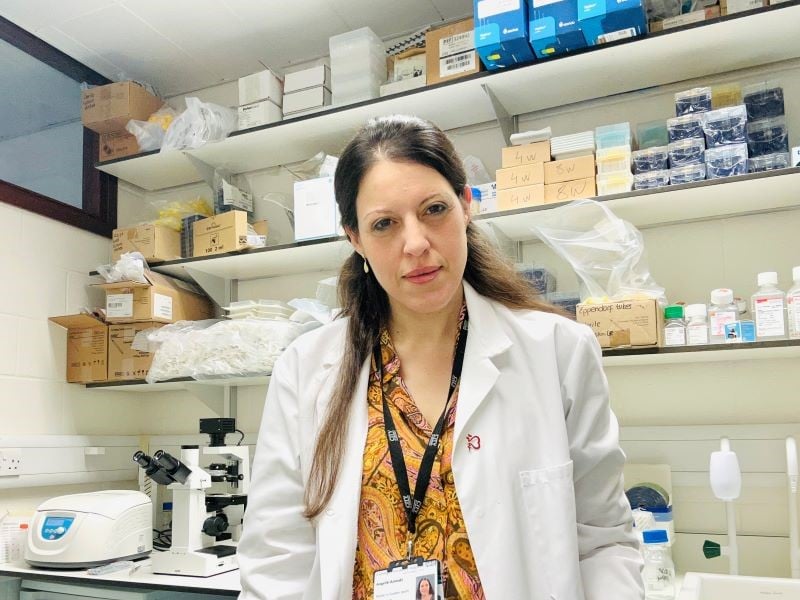
Remarkably, while contending with these health problems, Dr Asimaki built a prestigious research career, becoming a leading expert in arrhythmogenic cardiomyopathy (ACM) and sudden cardiac death in children and young people. In 2017, she moved to City St George’s, University of London and started a family. Her first child was born in 2018 and her second in 2021.
Pioneering research
Dr Asimaki’s British Heart Foundation-funded work focuses on finding new ways of diagnosing ACM. She is currently developing a simple two-minute cheek swab test that could potentially detect the dangerous condition years before someone might otherwise be diagnosed. This is possible due to her discovery at Harvard that protein markers of ACM in the heart are mirrored in cheek cells, offering a window to the inner workings of the heart.
If the test can detect the condition early, doctors can act faster to provide extra medical care, if appropriate, which could help to save young lives by preventing a sudden cardiac arrest.
Dr Asimaki said, “Our test provides a window into microscopic changes happening in the heart and is totally risk-free and non-invasive.”
The most recent trial of the swab test involved 51 children and young people, and findings – presented at a conference in August – were promising. Dr Asimaki and her team are now planning larger studies to gather more evidence that this test is effective.
She said “I think my experiences have given me a much greater understanding of what our patients are going through. If they have a heart surgery coming up, they may be worried, but the chances are that I have also had the same surgery and so I can empathise and discuss things better with them.
“I hope that by letting people know about my experiences, it can be an inspiration not just to fellow researchers, but also to heart patients.”