

'Lucky' stroke survivor whose only symptoms was being unable to read

A stroke survivor is warning others to watch out for unusual symptoms after joining study we are funding.
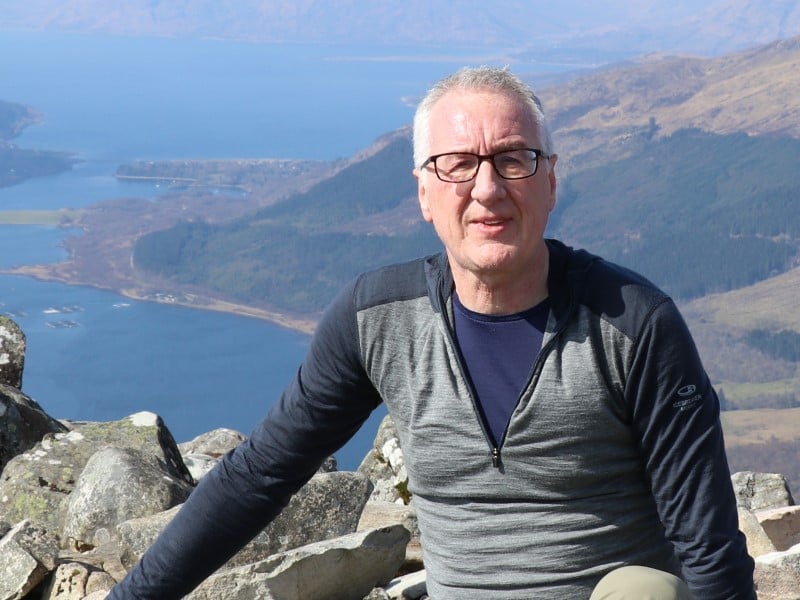
Gordon Robb had a stroke involving a bleed in his brain, but his only symptom was finding that written words suddenly looked as if they were in a foreign language.
The 63-year-old is now taking the drug clopidogrel, as part of a clinical trial run by researchers at the University of Edinburgh. This study will examine if clopidogrel or aspirin, which are ‘antiplatelet’ drugs that reduce the risk of blood clotting, can prevent future strokes, heart attacks and premature deaths in people who have had a haemorrhagic stroke – a stroke caused by a bleed in the brain.
"I assumed I was tired"
Gordon, from Bonnyrigg in Midlothian, put it down to tiredness when, on September 27 last year, he checked his emails and could not read them.
Gordon, the former vice-president of a biotech company, said: “I was in the garden, went in to have a cup of tea, listen to some music and check my emails on my phone - and it was like they were in a foreign language. I could see them clearly, and see who they were from, but the words meant nothing to me.
“I just assumed I was tired because I had been up late the night before. When friends were then messaging me about the Ryder Cup that evening and I couldn’t see the messages, I just gave myself an early night.”
The following evening, when he was unable to read the instructions on a cash machine to withdraw money, he resolved to go to see his GP the next day.
However, when he told his cousin - whose husband had died from a sudden stroke just three weeks earlier - she drove straight to his house and insisted on taking him to A&E. There, doctors told him he had had a haemorrhagic stroke.
Approximately 15 per cent of strokes are haemorrhagic. The majority of strokes are ischaemic strokes, caused by a blocked artery.
A few months on, Gordon’s symptoms are improving, although it now takes him half an hour to read a chapter instead of his previous 10 minutes, and more recently he has noticed he occasionally can’t find the right word during a conversation.
"Incredibly lucky"
Gordon said: “I am incredibly lucky, and quite honestly felt like a fraud in the stroke ward because I was no different to how I am normally, except that I suddenly could not read words. A group of student doctors in neurology who were brought to see me even said they would have struggled to diagnose that I had had a stroke.
“I knew some of the classic signs of a stroke like facial weakness, being unable to raise my arms or speech issues, but had none of these. It just shows the importance of paying attention to unusual symptoms, even if they aren’t ones you have heard of before. If I hadn’t gone to the hospital, and quickly received treatment, I could have been walking around with a ticking time-bomb in my head.”
Difficulty recognising written words on its own, without any other symptoms, affects fewer than one per cent of people at the time of their stroke, according to researchers.
International study
While in hospital, Gordon signed up to a study being led by Professor Rustam Al-Shahi Salman at the University of Edinburgh, which is called ASPIRING (Antiplatelet Secondary Prevention International Randomised study after INtracerebral haemorrhaGe).
The international study is recruiting people who have had a stroke due to bleeding in the brain, also known as a haemorrhagic stroke. Study participants in the UK will be given 'antiplatelet’ medicines like clopidogrel or aspirin, which reduce the chances of a stroke or heart attack by preventing cells in the bloodstream, called platelets, from sticking together and forming a blood clot.
Antiplatelet medicines are not routinely prescribed for people who have had a haemorrhagic stroke, because of safety concerns that they may increase the risk of bleeding. But a small study called RESTART, led by the University of Edinburgh and also funded by us, found aspirin and clopidogrel are safe after a haemorrhagic stroke.
Reduce future stroke risk
In this new larger study, researchers in the UK now aim to understand if clopidogrel or aspirin can reduce the likelihood of having future strokes, heart attacks and other clotting and bleeding problems in people who have survived a haemorrhagic stroke.
Major clotting or bleeding problems occur in around one in 10 haemorrhagic stroke survivors every year.
Gordon is one of more than 4,000 people worldwide set to join the study.
Our clinical director, Dr Sonya Babu-Narayan, said:" Facial weakness, arm or leg weakness and speech problems are well-known signs you or your loved one may be having a stroke, but there are some lesser-known symptoms like being unable to recognise the written word.
“If you have a symptom that you feel is not right, however strange or unusual, it is really important to seek help. Every minute matters if you may be having a stroke or other medical emergency.
“We know stroke survivors often fear having another stroke and how disabling this could be. That is why the BHF is funding clinical trials like ASPIRING, which will test whether prescribing antiplatelet drugs could protect more people.”