Understand health
Statins – your questions answered

We investigate research behind media reports that over-40s living with obesity now have blood pressure and cholesterol levels similar to – or even better than – people with a normal body mass index (BMI), largely due to statins and blood pressure medicines.

According to media claims, older adults living with obesity now have similar, or even better, heart health than those with a healthy weight, thanks to the widespread use of cholesterol and blood-pressure lowering medicines over the past 30 years.
The reports come from a study in The Lancet in July 2026 that shows differences in unhealthy cholesterol levels and blood pressure have “narrowed or disappeared” among people with obesity aged 40 and over compared to those without obesity.
The findings are important because both high blood pressure and high cholesterol are known to increase the risk of cardiovascular diseases (CVD) such as heart attack and stroke.
Obesity is also known to increase CVD risk, and in the past adults with obesity were more likely to have increased blood pressure and higher levels of unhealthy cholesterol.
Until now, there’s been no long-term information on whether lowering blood pressure and cholesterol in people with obesity brings their CVD risk down to the same level as someone with normal weight.
So, researchers from the Non-Communicable Disease Risk Factor Collaboration (NCD-Risc) analysed data from 110 health surveys involving nearly 1 million adults aged 20 to 79 years.
The data covered 1990 to 2024 and came from 7 countries: England, United States, Japan, South Korea, Taiwan, Thailand and Finland.
The research team looked at the top blood pressure readings (systolic blood pressure) and non-HDL (bad) cholesterol across different body mass index (BMI) groups:
| BMI category | BMI range (kg/m2) |
|---|---|
| Normal | 20 to 24.9 |
| Overweight | 25 to 29.9 |
| Class 1 obesity | 30 to 34.9 |
| Class 2 and 3 obesity (severe obesity) | 35 or higher |
They also examined the use of blood pressure-lowering medicines and cholesterol-lowering medicines such as statins.
The study notes that in the 1990s, adults with obesity generally had higher blood pressure and non-HDL cholesterol levels than those with a normal BMI.
During the next 30 years, blood pressure and unhealthy cholesterol levels fell more in people aged 40 to 79 who were overweight or living with obesity than in people with a normal BMI in most of the countries studied, including England and the US. The pattern was less clear in Taiwan and Thailand.
The change was most noticeable in older adults (aged 60 to 79).
In England and the United States, older people with obesity – especially severe obesity – ended the study period with similar or even lower blood pressure and non-HDL cholesterol than older people with a normal BMI.
This coincided with greater use of blood pressure and cholesterol-lowering medicines among people with obesity, especially middle-age and older people, suggesting that treatment may have been an important driver of the change.
For example, by the early 2020s in England and the US, around 70 to 72 per cent of older men with severe obesity were taking cholesterol-lowering medication compared with 40 to 48 per cent of older men with a normal BMI.
However, in the under 40s, there was little or no narrowing of the gap.
But the study notes that medication use stayed low in this age group regardless of BMI.
In a press release, lead author Professor Majid Ezzati from the School of Public Health, Imperial College London, said the findings suggested that medication to lower blood pressure and cholesterol had helped middle-aged and older adults with obesity in high-income countries reduce their CVD risk to levels similar to people with a normal BMI.
Co-author of the study, Lakshya Jain, a PhD student at the School of Public Health at Imperial, noted that the convergence was largely due to the wider and more intensive use of these accessible medicines.
In the same press release, she said it was a “significant public health success story” that should not be overlooked as weight-loss medications become more common in high-income countries.
The researchers also highlighted that while the news was positive for older adults, CVD risks remained higher for younger adults with obesity.
Early lifestyle changes, screening and medicines, when necessary, should be considered to help prevent long-term complications, they said.
They also stressed that other obesity-related health risks – including type 2 diabetes, kidney and liver disease, and certain cancers – remained important.

This is a large, multi-country analysis of national population-based surveys across more than 30 years with 978,425 participants aged between 20 and 79 years.
The research was published in The Lancet – a well-respected journal – and provides a more detailed picture of long-term trends than previous smaller studies.
However, this type of research can show strong links and trends but cannot prove that medicines alone caused every part of the change.
Other limitations include the focus on only 7 industrialised countries.
This means the results may not apply to countries where these medicines are less accessible.
The study also did not examine different medicine doses or fully separate the effects of lifestyle changes from medication.
Writing in a linked comment, Dr Yuan Lu from Yale School of Medicine, US, who was not involved in the research, noted that just because blood pressure and cholesterol levels had become more similar in people with and without obesity, it did not mean the health risks of obesity had gone away.
Medicines can reduce some of the harm to the heart and blood vessels, but obesity still affects many other parts of the body, he said.
Dr Lu also noted that younger adults have not seen the same improvement in blood pressure and non-HDL cholesterol levels, so prevention still needs to focus on the whole person, not just individual risk factors.
Reports in The Guardian, The Independent and The Standard generally reflected the main findings accurately, noting the role of statins and blood pressure medicines and the age differences.
Some headlines were more dramatic – “better off” or “heart attack risk now similar” – which slightly oversimplified the nuance that other obesity-related risks remain, and that the findings apply mainly to older adults in industrialised countries.
Coverage of the study’s limitations was also mixed.
The study shows just how effective modern treatments for blood pressure and cholesterol have become, and for many older adults living with obesity, these medicines appear to have helped close the gap around CVD risk factors.
Professor Bryan Williams, Chief Scientific and Medical Officer at British Heart Foundation, said: “The research highlights the value of treating raised blood pressure and cholesterol. These continue to be major modifiable risk factors for heart attack and stroke, regardless of a person’s weight.
“But it’s important not to forget that obesity still carries other health risks. Maintaining a healthy weight through diet and physical activity, alongside managing blood pressure and cholesterol, is an important part of protecting your heart health.
“Younger adults living with obesity in particular may benefit from earlier attention to lifestyle and, where needed, medical care.”
It’s important for everyone to know their blood pressure and cholesterol levels.
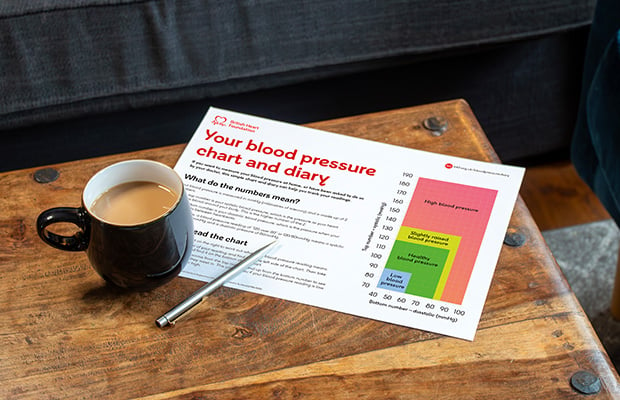
You can check your blood pressure at a GP surgery, pharmacy or at home if you have a blood pressure monitor, while a simple blood test can check your cholesterol levels.
Speak with your GP or pharmacist if you have concerns about your weight, blood pressure or cholesterol.