Behind the headlines
Can orforglipron preserve weight loss after Mounjaro?
We fact check headlines about a study that suggests the injection Mounjaro is still the most effective medication for weight loss and can lower the risk of heart failure, but does not reduce the chance of having a heart attack.

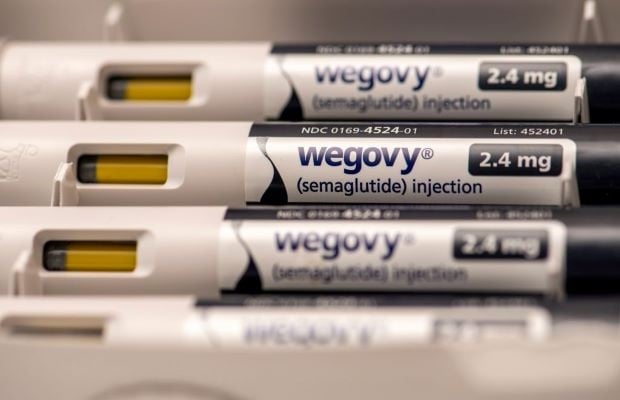
The weight-loss injection Mounjaro and the new Wegovy pill are both more effective than the Wegovy injection for reducing weight when taken alongside healthy lifestyle changes, according to a new study.
But the Wegovy injection is the only weight-loss injection that lowers the risk of a heart attack.
The findings come from a study that compared 19 different weight-loss medicines by reviewing 262 clinical trials covering nearly 100,000 people living with excess weight or obesity.
Many of these were GLP-1 agonist injections or tablets, such as Mounjaro (tirzepatide) and Wegovy (semaglutide).
They also looked at GLP-1 agonist medicines not yet available in the UK, including the weight-loss injections CagriSema (cagrilintide-semaglutide) and retatrutide, neither of which have a brand name yet.
The review, published in July’s British Medical Journal (BMJ), found that Mounjaro and CagriSema were the most effective drugs for weight loss compared to lifestyle changes alone.
The researchers from China also found that people lost slightly more weight on the recently approved Wegovy pill compared to the injectable version.
However, the Wegovy injection was the only drug in the study that significantly reduced the risk of either having a heart attack or dying from any cause.
Finally, Foundayo (orforglipron), a new weight-loss pill recently approved in the UK, had the highest percentage of people stopping treatment due to side effects.
To find out which drugs caused the most weight loss, the researchers looked at how much weight people lost after 1 year on each medicine compared to healthy lifestyle changes alone.
Weight-loss drug |
Average % difference in weight loss |
Available in the UK? |
|---|---|---|
| Mounjaro (tirzepatide) injection |
14.9 | Yes, on the NHS if you meet certain criteria and by private prescription |
| CagriSema (cagrilintide-semaglutide) injection |
14.8 | No |
| Wegovy (semaglutide) pill |
10.9 | Yes, only by private prescription |
| Foundayo (orforglipron) pill |
9.9 | Yes, only by private prescription |
| Wegovy (semaglutide) injection |
9.8 | Yes, on the NHS if you meet certain criteria and by private prescription |
| Phentermine-topiramate pill |
8.1 | No, denied approval due to safety concerns |
The top 5 most effective medicines were all GLP-1 agonists. This type of drug mimics hormones in the body to lower appetite, slow digestion and increase fullness, which helps people eat less and lose weight.
Some weight-loss medicines in the review, including GLP-1 agonist Saxenda (liraglutide) and non-GLP-1 drugs orlistat and Mysimba (naltrexone-bupropion), were not found to be more effective than lifestyle changes alone.
The researchers also found retatrutide, another unapproved weight-loss medicine still undergoing clinical trials, may lead to 13.1 per cent more weight loss than lifestyle alone, but the evidence was less certain.
Although it was ranked fifth for weight-loss, the Wegovy (semaglutide) injection was the most effective at reducing the risk of a heart attack or all-cause mortality.
Compared to lifestyle changes alone, people taking a weekly injection of semaglutide were 28 per cent less likely to have a heart attack and 19 per cent less likely to die from any cause after 57 weeks.
These findings were driven by large trials that looked at the effect of semaglutide over a long period, including the SELECT trial.
The researchers noted that more long-term research is needed into newer drugs like the Wegovy pill or CagriSema to find out if they are more or less effective at reducing heart attack risk.
Both Wegovy (semaglutide) and Mounjaro (tirzepatide) lowered the risk of developing heart failure by 57 per cent and 51 per cent respectively after 1 year.
Mounjaro also reduced the risk of being hospitalised for heart failure by 53 per cent.
But none of the medicines decreased the risk of having a stroke. Nor did they significantly increase the participants’ ‘quality of life’ score, which is a self-reported questionnaire on overall health and wellbeing.
The researchers also explored how many more participants per 1,000 people taking each drug stopped treatment due to side effects (adverse events) compared to those making lifestyle changes alone:
Weight-loss drug |
Number per 1,000 |
|---|---|
| Foundayo (orforglipron) | 94 |
| Mysimba (naltrexone-bupropion) |
38 |
| Saxenda (liraglutide) |
38 |
| Phentermine-topiramate |
35 |
| CagriSema (cagrilintide-semaglutide) |
34 |
| Wegovy (semaglutide) pill |
28 |
| Mounjaro (tirzepatide) |
28 |
| Wegovy (semaglutide) injection |
20 |
People were most likely to report digestive problems and fatigue (tiredness) on Mysimba (naltrexone-bupropion), while CagriSema (cagrilintide-semaglutide) caused the most gallbladder-related disorders.
In the study, the researchers concluded that “larger benefits are generally accompanied by greater harms, treatment burden, and discontinuation.”
While Mounjaro (tirzepatide) was the most effective drug for losing fat (25.7 per cent more than lifestyle alone), it also led to the biggest loss of lean mass (8.3 per cent).
Losing lean mass, such as muscle mass, can be a side effect of rapid weight loss and can slow your metabolism. This could make it harder to maintain weight loss after coming off medication.
People taking the Wegovy (semaglutide) injection also lost 5.8 per cent more lean mass on average, while the Wegovy pill had a smaller effect on lean mass (3.3 per cent) compared to lifestyle changes alone.
If you’re taking weight-loss medicines, eating more protein and doing regular strength exercises can help to prevent muscle loss.

The study was a meta-analysis of 262 randomised controlled trials, which is one of the most reliable types of trial for measuring the effects of any treatment.
It included 99,791 adults with and without type 2 diabetes, who had an average age of 49 years and BMI (body mass index) of 34.7.
However, most of these trials were relatively short, with an average follow-up time of around 6 months (26 weeks). Only a few were longer than 2 years, and some were less than 3 months (12 weeks).
This is a limited amount of time to see how effective each drug is, especially when it comes to measuring their impact on the risk cardiovascular disease, which increases the risk of heart attack but often takes decades to develop.
Also, there were fewer trials on newer drugs. For example, there were only 2 trials on Foundayo (orforglipron), compared to 31 trials on the Wegovy (semaglutide) injection.
This means that the evidence is less certain for weight-loss medicines still in development compared to more established drugs, and more long-term data on the newest pills and injections is needed to see if they can deliver lasting health benefits.
The study was covered by lots of UK news outlets, including The Mirror, The Independent, the Daily Mail and The Sun.
All of them reported that none of the drugs were found to increase quality of life but noted that the trials’ short follow-up time limited any conclusions about their long-term effects.
The Mirror said that the ‘the more pounds people shed, the higher risk of side effects and muscle wastage’.
This may be misleading, as the review did not show that losing more weight was linked to more side effects. Instead, the researchers suggested that more effective weight-loss medicines may cause more side effects, including reducing lean mass.
Also, the term ‘muscle wastage’ could be alarming, as this usually refers to muscle loss caused by disease rather than losing excess weight.
While this analysis combines lots of data on many different types of weight-loss medications, more research is needed to find out how they affect heart health in the long term, especially for drugs yet to be approved by UK health authorities.
British Heart Foundation’s Clinical Director and cardiologist Dr Sonya Babu-Narayan, said: “For some of the medicines included in the analysis, the evidence is still emerging with trials in progress, so it is too early to make strong conclusions of their relative effects.”
However, she noted: “The findings reinforce that GLP-1 medicines, prescribed by a doctor, are an important option for some people and that they work best alongside healthy eating, regular physical activity, including strength exercises, and other healthy behaviours.”
If you’re thinking of trying a new medicine for weight loss, your doctor can help you weigh up the benefits and potential side effects.