


Understanding high cholesterol
Download or order our free booklet on high cholesterol. It explains what it means to have high cholesterol, the best ways to lower your cholesterol and where to get support.
Cholesterol is a fatty substance in your blood that’s produced naturally in your liver. Having some cholesterol is important because the cells in your body use cholesterol to keep them healthy.
But if you have too much cholesterol in your blood, it’s called high cholesterol. Having too much cholesterol in your blood can narrow your arteries and cause fatty material to build-up (atherosclerosis). This can increase your risk of having a heart attack or stroke.
You may hear high cholesterol being called hypercholesteroalemia or hyperlipidemia. Your doctor may call it lipid dysregulation or say you have an abnormal lipid profile after a blood test.
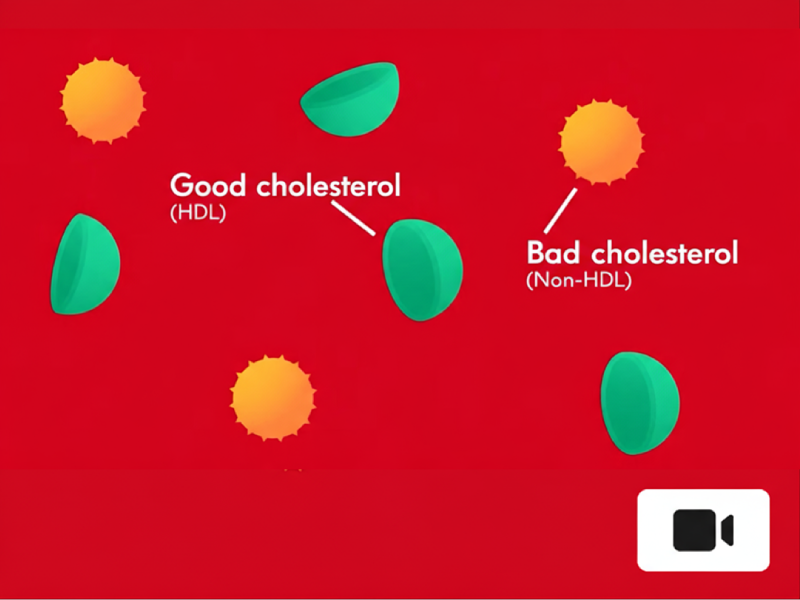
Watch our short video explaining what cholesterol is, what causes high cholesterol and how it affects your health.
Cholesterol is carried around your body by proteins in your blood. When cholesterol and proteins combine, they’re called lipoproteins. There are two main types of lipoproteins, you may hear them being called good and bad cholesterol.What is ‘good’ and ‘bad’ cholesterol?

Cholesterol attaches to protein to form lipoproteins
Our blood also contains a fat called triglycerides. Triglycerides help to give you energy and look after your health. But if you have too much in your blood your arteries can become narrow. This can increase your risk of a heart attack or stroke.
Living with excess weight, eating food that’s high in saturated fat and sugar, and drinking too much alcohol can cause high triglyceride levels. High triglyceride levels can also be caused by inherited or genetic conditions and other health conditions.
Your doctor can tell you if your triglyceride levels are too high when they check your cholesterol.
Find out more about triglycerides levels and how to reduce them.
Some foods naturally contain cholesterol, such as eggs, liver, kidney and shellfish, like prawns. This is called dietary cholesterol.
For most people, dietary cholesterol does not have much effect on your cholesterol levels. You can eat foods containing cholesterol as part of a healthy diet.
Anyone can get high cholesterol. It can be caused by lots of different things. Some you can influence and others you cannot.
Lifestyle factors you can influence
Find lots of simple swaps and easy tips to lower your cholesterol in our Understanding high cholesterol booklet.
Age, sex and other conditions
If you’re transgender you may have a higher risk of heart disease and high cholesterol. Speak to your doctor to understand your risk of high cholesterol.
Other causes of high cholesterol
Read more about the causes of high cholesterol on Heart UK’s website.
Most people with high cholesterol have no symptoms.
It’s a hidden risk factor, meaning you can have it without knowing. That’s why it’s important to get your cholesterol levels checked by having a blood test.
If you have familial hypercholesterolaemia (FH) you may have visible signs of high cholesterol.
Your cholesterol is measured using a blood test. A cholesterol blood test is sometimes called a lipid profile because it looks at different fats in your blood.
You can get your cholesterol checked at:
Adults in England should be offered a free NHS health check when they turn 40. The rest of the UK may also have similar schemes. Ask your GP or pharmacist for more information.
A cholesterol blood test (lipid profile) will measure your:
Your GP may also ask for your LDL levels to be checked.
Your doctor may use the words primary or secondary prevention.
Primary prevention is managing your cholesterol and heart health to prevent you having a heart attack or stroke in the future.
Secondary prevention is managing your cholesterol and heart health after you’ve had a heart attack or stroke, to prevent you having another one.
If you’ve had a heart attack or a stroke your recommended levels of cholesterol and triglycerides may be lower.
Talk to your doctor about what your cholesterol levels should be based on your individual health and any risk factors.
There are lots of things you can do to help lower your cholesterol:
Find heart-healthy recipes to cook. You can also find lots of easy tips to help you lower your cholesterol in our booklet Understanding high cholesterol.

Watch our short video on which foods are best to help lower your cholesterol
Your doctor may also recommend medicine to help lower your cholesterol. Medicines can also help reduce your risk of a heart attack or stroke.
Statins are the most common medicine used to lower cholesterol. Sometimes other medicines can be prescribed, but this is usually by a specialist. Speak to your doctor if you have questions about medicines.
You will usually need to make healthy lifestyle choices as well as taking medicine to lower your cholesterol.
Your GP should invite you for a blood test every year to check your levels and how you’re getting on with any medicines or lifestyle changes
Speak to your doctor if you have any questions about your cholesterol.
You can also explore our managing cholesterol hub for support to lower your cholesterol levels.

If you have high cholesterol, it's important to know you're not alone.

We've followed an eight-step process to make sure this content is reliable, accurate and trustworthy.
Learn how we make our health content.
Download or order our free booklet on high cholesterol. It explains what it means to have high cholesterol, the best ways to lower your cholesterol and where to get support.
Download or order our free booklet on looking after your heart. It walks you through the best ways to look after your heart and your health, with easy swaps and manageable changes.
Download or order our free booklet on eating better for a healthier heart. It has lots of simple swaps and tips for a healthier you.