

"Every time I ate a meal I feared my heart would stop beating"


An extremely rare medical condition, which caused a mother-of-two to black out when she ate, has been successfully treated using a cutting-edge medical procedure, in a study supported by us and the NIHR Imperial Biomedical Research Centre.
Sarah Hall’s heart stopped beating properly 12 times in a single day, triggered simply by her swallowing, before she joined a research project led by Imperial College London, which is being presented at the annual conference of the British Cardiovascular Society in Manchester. Mealtimes frequently ended in her fainting or losing consciousness, leaving her terrified to go out for dinner with friends in case she collapsed and hit her head.
The 50-year-old had a condition called cardioinhibitory swallow syncope, of which there have only ever been fewer than 150 reported cases worldwide. This is a type of vasovagal syncope – the medical term for fainting caused by a sudden drop in heart rate and blood pressure.
Cutting-edge procedure
Sarah’s fainting episodes did not respond to conventional treatment and so she was given a cutting-edge procedure called cardioneural ablation (CNA) in a medical trial. She has not fainted once since receiving the treatment.
Data from 25 people treated in a trial of CNA are being presented at the conference. To date the researchers have treated 52 people with the procedure.
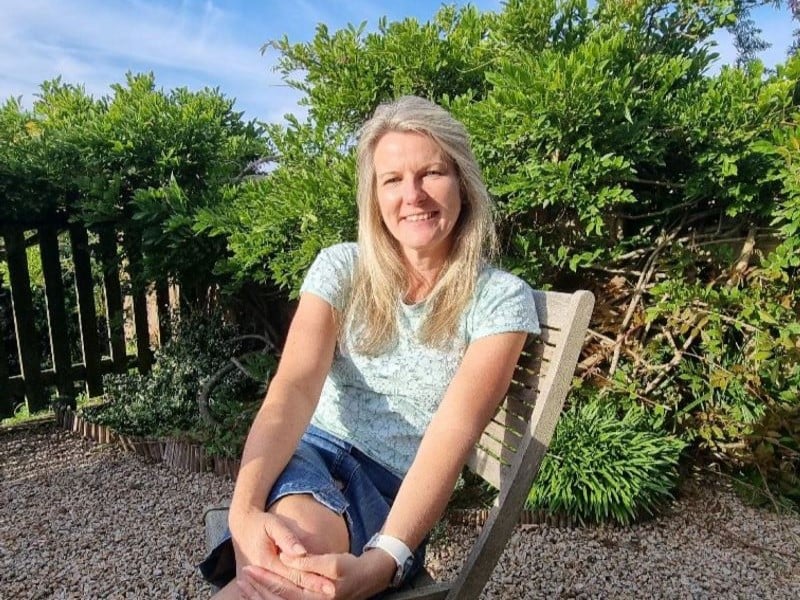
Sarah, a midwife from St Albans in Hertfordshire, said: “This condition I had affected everything - my job, my independence, and my home life.
“During family meals, my husband would have to sit next to me in case I lost consciousness, and my children would be wondering if I would make it through to the end without blacking out. What should have been normal family time became stressful and frightening.
"Hardest times in my life"
“I had to stop driving and I was signed off work for several months. It was one of the hardest times in my life. I started to have these scary thoughts that my heart might just stop when I was eating and never restart. But now I can live without fear.”
An estimated 40 per cent of us will faint at least once in our lives, and up to five per cent of this group will have multiple fainting episodes. But a much smaller group of people have ‘situational’ syncope which can cause them to faint within seconds of coughing, urinating or, in Sarah’s case, swallowing.
Sarah first began occasionally fainting, accompanied by vomiting, when she was 39. But several years later, at the age of 45, she began to experience dizziness which seemed to be triggered by eating. By the time she was 48, she was far more regularly fainting accompanied by visual disturbances and blackouts, where she lost consciousness.
She said: “Since I was in my late forties, I assumed this was just the perimenopause or that I had low blood sugar or dehydration from being a busy midwife in a hospital who did not eat or drink that regularly.
“But, at its worst, this was causing me to lose consciousness multiple times a day, and I was too afraid to eat in public in case it happened.
“It was when I lost consciousness in front of my children, who were only 12 at the time, during a family lunch, that the confusing and distressing situation made me realise that I really did need to get checked out.”
Her heart paused 12 times in 24 hours
Sarah, who lives with her husband and daughters in St Albans, was referred to a neurologist, then a cardiologist, and given a heart monitor to wear for 48 hours. This revealed that in one single day, her heart paused 12 times in 24 hours.
She was subsequently diagnosed with cardioinhibitory swallow syncope, a type of vasovagal syncope in which the vagus nerve (which runs from the brain to the heart and regulates heart rate and blood pressure) overreacts to a trigger. When Sarah swallowed, this stimulated her vagus nerve, generating electrical impulses which could slow her heart down, causing her to faint.
In extreme cases, like Sarah’s, someone’s heart rate doesn’t just slow down, but pauses – for up to a minute.
The small study offers hope to Sarah, and all those who have refractory vasovagal syncope - fainting caused by a slowing heart rate and dropping blood pressure which does not respond to conventional treatment. The researchers estimate this may affect around 7,500 people in the UK.
Cardioneural ablation (CNA), involves doctors inserting thin tubes called catheters through the groin and guiding them up to the heart, while a patient is under general anaesthetic. Using small electrical currents to stimulate nerves, the researchers created a detailed map of the outer layer of the heart to identify the nerves which triggered the heart-slowing response.
Then they delivered ablation, which generates heat to a specific region in the heart to safely destroy these problematic nerve cells.
The people in the study had previously tried treatments including better hydration, reducing triggers, and taking medication to prevent them fainting, which were unsuccessful. Usually for people with this condition, the only remaining option until recently was to have a pacemaker fitted, to prevent further heart-slowing responses leading to fainting.
However, pacemakers need to be replaced every 10 to 13 years, when the specialised batteries inside run down, and each repeat procedure carries an extra risk of causing an infection or other complication.
No longer fainted
The people in the study all had a slowed heart rate during fainting episodes, and reported 19 blackouts a year on average. But 12 months after the treatment, the average number of blackouts fell to around one a year. Around three-quarters of the group no longer fainted at all and most people were able to stop their medication.
Dr Sonya Babu-Narayan, our Clinical Director and a Consultant Cardiologist, said:
"For most of us, fainting is not harmful, but if you faint really often, your everyday life can be severely disrupted. Beyond the risk of injury, it can affect your confidence, independence and mental wellbeing, because these episodes are so unpredictable.
"The small study adds to growing evidence that using a specialised cardiac catheter lab procedure to disrupt bodies of nerve cells located near the heart could be transformative for people living with daily or weekly fainting episodes. While there are risks associated with any medical procedure, these findings are encouraging. But more research, including larger trials also studying longer term effects, are needed to fully understand who would benefit from this treatment, and how best to offer it more widely.”
The CNA procedure, administered to 25 people between 2013 and 2023 at Imperial College London, was generally safe, although three people needed it more than once. Only one patient still required a pacemaker despite having ablation, due to recurrent sinus arrest, which happens when the heart’s natural pacemaker pauses. People in the study reported a significantly improved quality of life after CNA, and reduced feelings of anxiety and depression. Sarah says it completely changed her life.
Sarah was referred by her doctors to the trial at Hammersmith Hospital in London, because of concerns about giving her a pacemaker at a younger age. She says she has been completely symptom-free ever since the CNA procedure in 2024.
She said: “In the months leading up to my ablation, every time I ate I would feel the blood draining from my head and be overwhelmed by dizziness which turned everything black until sometimes I lost consciousness.
“I never knew when it would happen, and eating had become functional, unenjoyable, and something I avoided socially. Those around me treated every mealtime as a ‘high-alert’ situation.
“But after the ablation, I can go out for dinner again, enjoy food, and say yes to social plans without fear. I can drive, I can work - it feels like everything has come full-circle. Thanks to the researchers and amazing doctors, my life is truly back to normal.”
Researchers hope their research could pave the way for larger trials and wider adoption of CNA, potentially giving new hope to patients whose lives are severely disrupted by repeated blackouts.
The research, led by Dr Boon Lim, Consultant Cardiologist and clinical lead of the syncope programme at Imperial College Healthcare NHS Trust, offers new hope for patients whose lives have been severely disrupted by recurrent fainting episodes.
"Treat the root cause"
Dr Mohamed Zuhair, syncope fellow and researcher at the National Heart and Lung Institute, Imperial College London, noted:
“For many people, fainting is brushed off as something minor, but for those living with severe, recurrent episodes, it can be debilitating. Some of our patients were fainting up to 100 times a year, and living in constant fear of when the next episode might strike.
“CNA offers a way to treat the root cause of this condition. It allowed the people in the study to get back to living normal lives without needing a pacemaker. We hope that this procedure will be adopted by more clinicians.”