

First patient has gene therapy which could help heart bypass last longer

A heart attack survivor is the first person to receive groundbreaking gene therapy which aims to prevent a major heart procedure from failing. The clinical trial now underway in Glasgow is the result of many years of research, much of it funded by us.

In the trial, researchers are investigating whether a new gene therapy can stop coronary artery bypass grafts failing in the years after surgery.
Coronary artery bypass surgery is used to treat coronary heart disease, a common condition where the coronary arteries which supply the heart with blood become narrowed by fatty material within their walls. During surgery, vein grafts are taken from elsewhere in the body to create a new vessel which ‘bypasses’ the narrowed or blocked coronary arteries, restoring blood supply to the heart.
But the veins used in this type of surgery can fail because they are not naturally designed to withstand the high pressure of blood flow from the heart. It’s estimated up to half of the vein grafts used will become blocked and fail after 10 years.
Preventing grafts failing
The new gene therapy is designed to help prevent the walls of the vessel thickening and the graft vessel becoming blocked over time.
During heart bypass surgery, researchers treat the graft blood vessel with the gene therapy. The gene it is exposed to, called TIMP-3, produces a protein which helps tissues within the body change their structure. It’s thought treating graft vessels with the TIMP-3 gene therapy will help prevent thickening and blockage of the graft over time.
The team leading the trial hope that the therapy, which was developed over many years with the help of funding from us, will extend the number of years patients can live in good health, and reduce the need for further surgery.
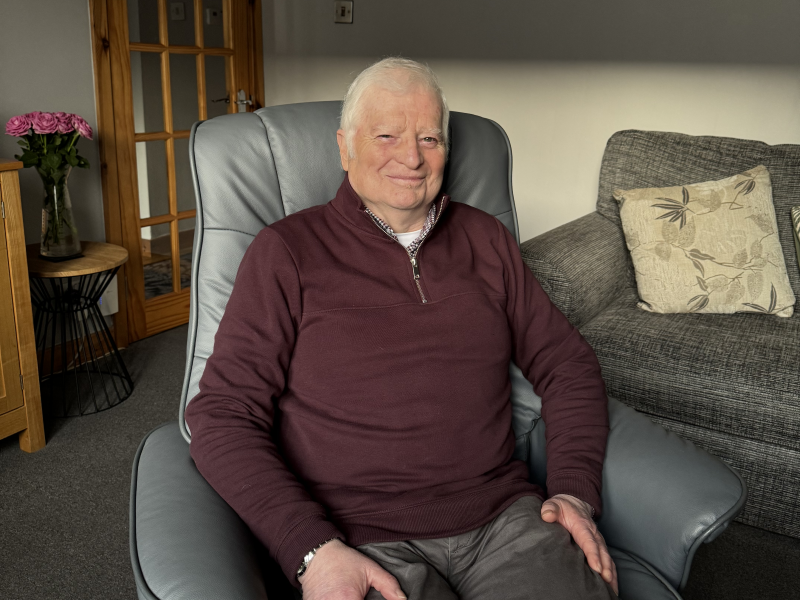
John MacDonald, 73, became the first person to receive the treatment as part of the PROTECT study after he suffered a heart attack at home at the beginning of August and was flown to Golden Jubilee University National Hospital.
The grandfather-of-three from Stornoway in Scotland, volunteered to take part in the trial, led by NHS Greater Glasgow and Clyde and the University of Glasgow, when he had coronary artery bypass surgery.
John said: “My wife and I thought, well, if it’s going to benefit me in the years to come, and benefit others in the future because it has been through this trial, then I would like to do that.
“This experiment could not only prolong my life, but it could prolong my healthy years.
“I’m glad to be helping the clinical and research teams achieve what they are trying to do, and I’d encourage others to consider taking part in studies like this one that could help many people in the future.”
The retired lorry driver, who previously had stents fitted following a cardiac arrest at the age of 60, said he feels “on top of the world” following his surgery, where a vein from his leg was given gene therapy before being grafted into his chest.
He said: “I can go up and down the stairs in the house now, I don’t feel lethargic anymore. I’m sleeping a lot better than I ever was. My health is just fantastic.”
Many years of research
Our director of research, Professor James Leiper, said: “This pioneering study is an inspiring reminder of how far gene therapy, which was once a distant scientific ambition, has come.
“Research funding from the BHF to Prof Andrew Baker over many years laid the groundwork for this study, generating the knowledge, experience and proof of concept data needed to move this research out of the lab and towards the clinic. In partnership with the MRC, continued BHF funding has enabled Prof’s Berry and Baker to begin the clinical trials necessary to prove the value of this new therapy.
“We look forward to seeing the results of this exciting trial in a few years. While it’s early days, positive results would open up opportunities for more patients like John to continue to feel ‘on top of the world’.
“But breakthroughs like this are only possible because of the generosity of the public. We need support now more than ever to continue funding the next frontier of cardiovascular research that can help to save and improve lives.”
Becoming a reality
Professor Andrew Baker, BHF Chair of Translational Cardiovascular Sciences at the University of Edinburgh, and academic lead for the study, said: “I’m hugely grateful to the Medical Research Council and British Heart Foundation for helping the team translate this laboratory discovery to clinical evaluation.
“We have faced many challenges but our interdisciplinary team and funders working together have enabled the trial to become a reality.”