Eat well

Serum triglycerides: what level is too high?
Senior Dietitian Dell Stanford explains what serum triglycerides are, what level is too high and shares tips to get them back to the normal range.
Published:
Published:
What's on this page
- What are triglycerides?
- Triglycerides blood test
- Triglyceride levels: what’s normal, high and very high?
- What causes high triglyceride levels?
- How to reduce triglycerides
What are triglycerides?
Triglycerides are the most common type of fat found in the blood. You may also see the term ‘serum triglycerides’, which simply means triglycerides found in your blood.
Triglycerides provide energy to fuel the body and are essential for good health. However, if you have permanently high triglycerides (hypertriglyceridaemia), this can increase your risk of heart and circulatory disease. An estimated 10 per cent of people have raised triglycerides.
Triglycerides come from the fat-containing foods we eat, such as oils and fats, meat and full-fat dairy foods. These triglycerides can be used straight away for energy, or they are stored in fat cells in our body.
The liver also makes triglycerides. For example, when we have too many calories from sweet, sugary foods and drinks, our liver converts these into triglycerides and releases them into our blood.
Triglycerides blood test
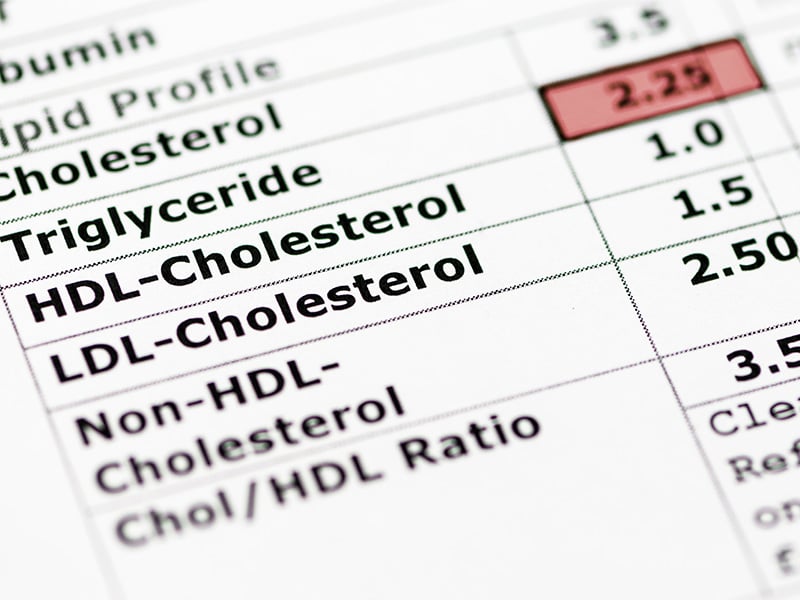
A simple blood test is all that’s needed to find out your triglyceride levels, and it is often done with tests for other blood fats such as cholesterol.
The triglycerides blood test can be taken ‘non-fasting’ or ‘fasting’:
- Non-fasting triglycerides: This test shows your triglyceride level when you have been eating and drinking normally. After eating your blood will always contain more triglycerides compared to when you have not had anything to eat or drink.
- Fasting triglycerides: This shows your levels of triglyceride after you’ve not eaten or drunk anything other than water for 10 to 14 hours. This test may be done if your non-fasting triglycerides result is high.
Triglyceride levels: what’s normal, high and very high?
Non-fasting triglycerides:
- Healthy levels are less than 2.3mmol/L.
- If your non-fasting triglyceride level is between 10mmol/L to 20mmol/L, you will probably be asked to have a fasting triglyceride blood test.
- If your non-fasting triglyceride level is more than 20mmol/L, you may be referred to a lipid specialist doctor, who will talk through options to help lower your triglycerides.
Fasting triglycerides:
- Healthy levels should be less than 1.7mmol/L.
- Fasting levels between 4.5mmol/L to 9.9mmol/L show mild or moderate hypertriglyceridaemia and your doctor will want to talk to you about ways to lower your triglyceride level, while considering your blood cholesterol levels.
- Fasting triglyceride levels more than 10mmol/L show severe hypertriglyceridaemia, and you may get referred to a lipid specialist doctor, who will talk through options to help lower your triglycerides.
If lifestyle changes do not lower your triglycerides enough, you may need medication.
What causes high triglyceride levels?
Doctors often refer to primary and secondary causes of high triglycerides.
Primary causes usually mean inherited (genetic) causes, such as familial hypercholesterolaemia (FH).
Secondary causes relate to diet, lifestyle and certain medical conditions, such as:
- lack of exercise
- too much alcohol
- an unhealthy diet (high in saturated fat and sugar)
- living with excess weight (particularly if you carry weight around your middle)
- having type 2 diabetes or metabolic syndrome.
How to reduce triglycerides
Making changes to your diet and lifestyle can help lower triglyceride levels:
- Eat a healthy balanced diet.
- Cut back on saturated fats from red and processed meats, butter and full-fat dairy foods.
- Swap saturated fats for unsaturated fats from oily fish, nuts, seeds and oils such as olive, rapeseed and sunflower oils.
- Cut back on added sugar from sweetened drinks, sweets, cakes, biscuits and desserts.
- Cut back on processed foods and switch from refined carbohydrates, such as white bread and pasta, to wholegrains such as wholewheat pasta and bread and brown rice.
- Limit how much alcohol you’re drinking to a maximum of 14 units per week. Some people may be advised to cut back further or avoid alcohol altogether.
- Get to and maintain a healthy weight.
- Become more physically active: aim to be moderately physically active for at least 150 minutes per week (or 30 minutes, 5 days a week).
If lifestyle changes do not lower your triglycerides enough, then you may need medication. Statins can help lower triglyceride levels, and if necessary, your doctor may prescribe other medications to further manage your triglycerides.
What to read next...
13 small changes that add up to a healthy diet

More useful information
Get active
How to motivate yourself to exercise