

Eat well
6 surprisingly healthy fatty foods
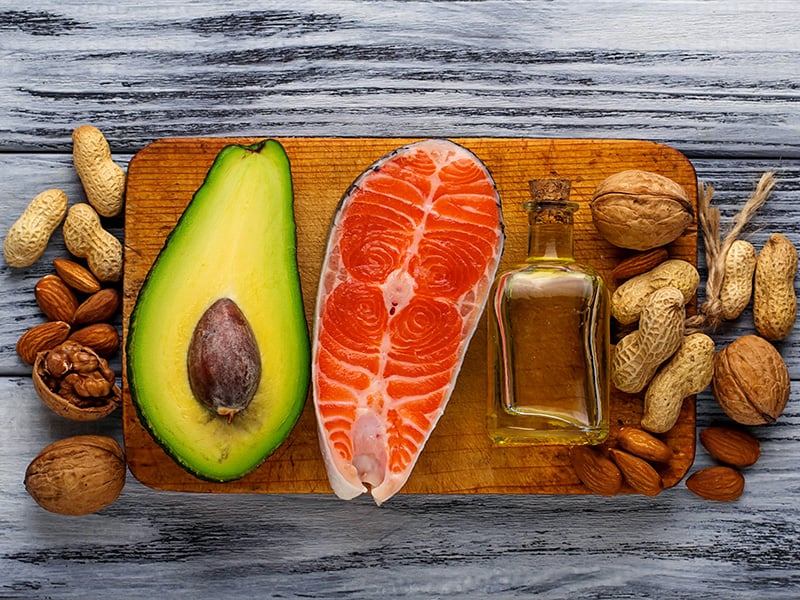
Our Senior Dietitian, Tracy Parker, explains that eating a balanced diet, rather than relying on olive oil alone, is better for heart and gut health.


Olive oil is often seen as a healthy choice, mainly because of its key role in the Mediterranean diet. All types - extra virgin, virgin and regular - are high in in unsaturated fats, especially a type called monounsaturated fat, which is linked with better heart health.
UK dietary guidelines recommend replacing saturated fats with unsaturated fats to support heart health.
One simple way to do this is switching from saturated fats like butter, ghee, coconut oil, palm oil to unsaturated oils and spreads like sunflower, rapeseed and olive oil.
A teaspoon of olive oil provides around:
Diets that include more monounsaturated fats – like a Mediterranean-style of eating – are consistently linked with a lower risk of heart disease.
One reason for this is that replacing foods high in saturated fat, such as butter, ghee or fatty meat, with healthier unsaturated fats can help lower ‘bad’ LDL cholesterol while keeping ‘good’ HDL cholesterol steady.

A large 24-year study looked at olive oil intake and heart disease. It found that people who used a small amount of olive oil (around 5g or a teaspoon) instead of the same amount of butter, margarine or mayonnaise had a slightly lower risk of heart disease (around 5 to 7 per cent lower).
However, this was not seen when olive oil replaced other unsaturated plant oils, like rapeseed or sunflower oils.
This suggests the benefit comes from swapping saturated fats for healthier unsaturated fats rather than uniquely olive oil alone, which aligns with UK dietary advice.
Olive oil also contains plant compounds called polyphenols, which have antioxidant and anti-inflammatory benefits. These may help protect your blood vessels, reduce inflammation and also support overall heart health.
Some research suggests that polyphenols may also help support ‘healthy’ gut bacteria. Because gut health and heart health are closely linked, a healthier gut may support a healthier heart.
However, the amount of polyphenols in the amount of olive oil you might typically use (around a teaspoon), even in extra virgin olive oil, is too low to make a difference to gut bacteria.
To reach the levels used in gut health studies, you would need to consume large, unrealistic and unadvisable amounts of olive oil (more than 5 tablespoons a day), which would add a lot of calories.
For better gut and heart health, it is more important to eat a balanced diet that includes a variety of polyphenol-containing foods such as fruit, vegetables, nuts, seeds, berries, wholegrains, and tea rather than rely on olive oil alone.
Not all olive oils are made in the same way. How the oil is extracted and processed can affect its flavour, quality, and the plant compounds they contain.
Extra-virgin olive oil (EVOO)
This is the least processed. It is made by mechanically pressing olives, without high heat or chemical solvents. This keeps most of the natural plant compounds, including polyphenols. EVOO has the highest concentrations of polyphenols, as well as the strongest flavour and aroma, which is why it is recommended for salad dressings, dips, or drizzled over cooked foods.
Virgin olive oil
This is also made by mechanical pressing, but it does not meet the same strict standards as extra virgin. It has slightly fewer polyphenols and a milder flavour.
Regular olive oil
This goes through more processing to remove flavour compounds and impurities that can burn easily. This also removes many of the natural polyphenols. However, this gives the oil a lighter flavour and a higher smoke point, making it useful for higher heat cooking such as roasting or frying.
Laboratory studies suggest that oils with a higher polyphenol content may have stronger antioxidant effects.
However, when it comes to health outcomes – like reducing heart disease risk - there’s no clear evidence that EVOO oil is significantly better than regular olive oil.
The key is that all forms of olive oil are all high in monounsaturated fats and when monounsaturated fats are used to replace saturated fats, this is linked with better heart health.
You may have heard that drinking a daily shot of olive oil can boost energy, improve digestion or help with weight loss. However, there is no evidence that drinking olive oil offers any special health benefits.
The benefits associated with olive oil are based on studies where olive oil is used as part of a healthy diet — not on studies of people taking it like a supplement.
A ‘shot’ of olive oil is typically 1 to 2 tablespoons (15 to 30 ml), which adds up to 120 to 240 calories in one go. Those calories can build up quickly and may lead to weight gain, which is linked with worse health.
It is more helpful and enjoyable to use olive oil in everyday meals – adding it to cooking, salad dressings, dips or drizzles – without over doing it.
Like all fats, olive oil is high in calories. A tablespoon provides around 120 calories, so it is easy to have more than you realise. Eating more calories than you need can lead to weight gain, which in turn increases the risk of heart disease.
This does not mean you need to avoid olive oil. The goal is not to cut out fat altogether, but to choose healthier fats, in sensible amounts.
Many people in the UK eat too much saturated fat, which is found in foods like:
Replacing some of these with unsaturated fats – including olive oil, rapeseed oil, nuts seeds and avocados – can be a positive change for your heart, if it does not increase how many calories you have overall.
When used in moderation, as part of a balanced diet, olive oil can be a simple way to include more heart-healthy fats in your meals.


