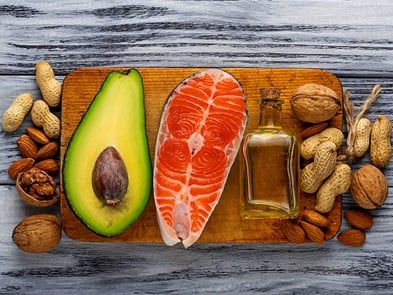
Are avocados good for you? Benefits, calories and nutritional content
BHF Senior Dietitian Dell Stanford takes a closer look at the health benefits of avocados and avocado oil, revealing they’re high in unsaturated fat and fibre – but also calories.


Avocados are an unusual fruit because as well as containing lots of healthy vitamins, minerals and fibre, they’re high in fat. Fortunately, most of this fat (more than 70 per cent) is the healthy kind.
But having such a high fat content means avocados contain a higher amount of energy (calories) than other fruits and vegetables too.
This means, although avocados are a healthy choice, you have to keep an eye on your portion size if you’re trying to manage your weight.
What are the health benefits of avocados?
Avocados are full of vitamins, mineral and fibre, and high in healthy unsaturated fats, meaning they fit well into heart-healthy diets such as the Mediterranean and DASH diets.
They also have a lovely creamy taste and texture that means they can feel indulgent, making them a good substitute for foods like cheese, butter and fatty meats that are high in unhealthy fats.
Here’s what makes avocados healthy:
Full of vitamins, minerals and fibre
About half a medium avocado (80g) counts towards your 5-a-day and contains useful amounts of:
- vitamins – including vitamin E and B vitamins
- minerals – particularly potassium and manganese
- fibre.
Like other fruit and vegetables, avocados can help boost your potassium intake, which studies have linked with lower blood pressure, which in turn helps lower your risk of cardiovascular diseases (CVD), such as heart attack and stroke.
High in unsaturated fat
The fat in avocados is mostly monounsaturated fat – a type of healthy unsaturated fat.
Having more foods that are high in unsaturated fats like avocados, nuts, olive oil and other plant oils, instead of foods that are high in saturated fats, such as margarine, butter, eggs, yogurt, cheese and processed meats, can help lower cholesterol levels that in turn lowers your risk of CVD.
Avocados’ heart health benefits are backed by research in the Journal of the American Heart Association, which suggests eating 2 or more servings of avocado per week (1 serving is half a medium avocado) can lower your risk of CVD by 16 per cent.
The 2022 study also found that eating a quarter of a medium avocado in place of the equivalent amount of margarine, butter, egg, yogurt, cheese or processed meats led to a 22 per cent lower risk of CVD.
It also found that replacing nuts, olive oil and other plant oils such as rapeseed and corn oil with avocado was not associated with a lower risk of CVD – showing that all these foods that have unsaturated fats are healthy sources of fat.
This is further evidence that swapping foods containing saturated fat for those with unsaturated fat can help protect your heart.
Low in carbohydrates
Being low in carbohydrates make avocados a popular choice for those following a lower carb diet, such as for weight loss as part of managing type 2 diabetes.
As a bonus, most of the carbohydrate in avocados is fibre which can contribute to gut health too.
High in protective plant chemicals
Avocados contain polyphenols and other plant chemicals that have anti-inflammatory and antioxidant effects linked to lower CVD risk.

What is the nutritional content of an avocado?
|
Nutrition |
Per 100g flesh |
Amount per half a medium avocado (flesh only) |
| Calories | 177kcal | 140kcal |
| Total fat | 17g | 13g |
|
saturated fat |
4.2g | 3g |
|
monounsaturated fat |
10g | 8g |
|
polyunsaturated fat |
2.3g | 1.8g |
| Carbohydrates | 1.7g | 1.4g |
| Fibre | 3.1g | 2.5g |
| Protein | 1.8g | 1.4g |
Is avocado oil healthy?
Avocado oil is extracted from the flesh of pressed avocados. Like olive oil and rapeseed oil (sometimes called vegetable oil) it contains mainly heart-healthy monounsaturated fat (about 70 per cent) but has a more neutral flavour.
This makes avocado oil a healthier choice than cooking fats high in saturated fat like butter, ghee, lard and goose fat. It’s also a good source of vitamin E.
Monounsaturated fat is more stable than polyunsaturated oils (e.g. sunflower and corn oil), plus avocado oil has a high smoke point, so it’s ideal for everyday cooking – sauteing, pan-frying, roasting and searing.
However, avocado oil is usually quite a bit more expensive than vegetable or rapeseed oil, so you might want to keep it for drizzling, marinades and dressings.

5 healthy avocado recipes
These heart-healthy recipes all feature avocado, whether it’s the star of the dish or a creamy topping.
- Avocado and poached egg on toast
- Fruity avocado salad
- Black bean and sweet potato burritos
- Fish tacos with avocado
- Vegetarian chilli with sweet potato
Mashed avocado also works well on toast. You might like to try it with some sliced tomato and a few fresh basil leaves, black pepper or a pinch of chilli powder.
- Discover more healthy toast toppings.
What to read next...