Understand health
Blocked arteries: what are the signs and symptoms?
Clopidogrel is an antiplatelet medicine that helps stop blood clots. BHF Senior Cardiac Nurse Ruth Goss explains that it’s commonly prescribed after a heart attack or stroke, for unstable chest pain, atrial fibrillation and following a stent procedure.


If you’re living with a cardiovascular disease, you may be on a medicine called clopidogrel, which is an antiplatelet medicine – also sometimes called an antiaggregant medicine.
The word ‘platelets’ refers to a special type of blood cell that helps your blood clot to stop bleeding after an injury. For most people platelets do not cause any problems.
But for some people, platelets can become a problem, such as after a heart attack.
Clopidogrel works by making platelets in the blood less sticky, so they cannot stick together and cause blood clots, which can lead to a heart attack or stroke.
Other antiplatelet medicines include aspirin and ticagrelor. But while they’re in the same general category of drugs as clopidogrel, they all work slightly differently and use different mechanisms to prevent blood clots.
You may be prescribed aspirin and clopidogrel at the same time.
Clopidogrel is commonly used as a treatment for people who have had a heart attack and have been diagnosed with coronary heart disease.
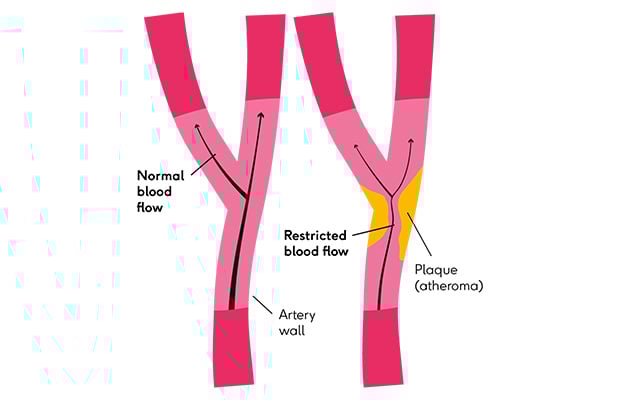
A heart attack can happen when fatty plaques or deposits build up in the coronary arteries (atherosclerosis) harden, then rupture or burst.
The body forms a blood clot to repair this, but this clot can block the coronary artery, stopping blood from getting to your heart muscle.
This means oxygen-rich blood cannot get to the heart muscle and it starts to die, which can lead to long-term damage.
Antiplatelet drugs like clopidogrel and aspirin can reduce the risk of another heart attack because they stop abnormal clotting in the coronary arteries.
You may also be prescribed clopidogrel for:

A narrowed artery with atherosclerosis compared to an artery blocked by a blood clot.
Clopidogrel is not a blood-thinner as it only works on platelets.
Medicines called anticoagulants, which include warfarin and direct oral anticoagulants (DOACs) such as apixaban, are known as blood-thinners.
They help prevent blood clots too, but these work in different ways from antiplatelet medicines.
Taking any medicine that affects how your blood clots mean you have to be aware of potential side effects.
The main side effect is bleeding more easily than usual. Signs you are bleeding include:
You may also experience:
Most of these side effects can be managed with advice from your doctor or pharmacist.
They may recommend you take another medicine to protect your stomach and help with indigestion.
You may be asked to stop taking some medicines and supplements that can affect how clopidogrel works, such as anti-inflammatories like ibuprofen used to treat pain, and herbal remedies like St John's Wort.
Your doctor or nurse may also recommend making lifestyle changes to reduce your risk of side effects like bleeding and bruising.
If you have concerns about taking clopidogrel, you should speak to your GP or pharmacist.