


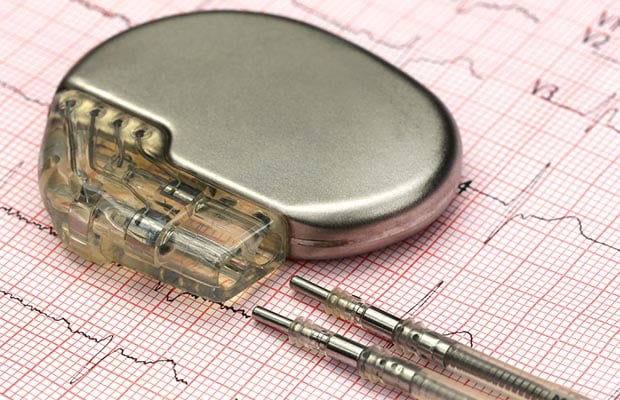
Pacemakers
A pacemaker is a small electrical device that’s put under the skin in your chest. It can treat some abnormal heart rhythms (arrhythmias).
Heart block happens when electrical impulses (signals) flowing through your heart are blocked or delayed.
Electrical impulses flow from the upper chambers (atria) to the lower chambers (ventricles) of your heart. These impulses tell your heart when to beat.
If you have heart block, these impulses can get blocked which can make your heart beat abnormally. Some of these will not cause any symptoms, but others are more serious

There are three main types of heart block.
An AV heart block happens when the electrical impulses are delayed or blocked as they travel between the top chambers of your heart and the bottom chambers of your heart.
There are 3 different “degrees” of AV heart block.
Types of atrioventricular or AV heart block |
|
|
First-degree heart block |
First-degree heart block is when electrical impulses can still reach your ventricles but move more slowly than normal. Most people with first-degree heart block do not have any signs and symptoms. It is the least severe and usually does not require treatment. |
|
Second-degree heart block |
Second-degree heart block is when electrical impulses from your atria sometimes do not flow to your ventricles. There are 2 types of second-degree heart block:
|
|
Third-degree or complete heart block |
With third-degree or complete heart block, electrical signal from your atria do not flow at all to your ventricles. This is the most severe form of heart block and usually requires a pacemaker. |

First degree AV heart block

Second degree AV heart block

Third degree AV heart block
A bundle branch block is when your electrical impulses that travel through the bottom chambers of your heart (ventricles) are slower than normal. This happens because of a block in the path that your electrical impulses follow. This delay does not often cause symptoms.
The delay or block can happen on the pathway that sends electrical impulses to either the left or right side of the ventricles.
There are 2 types of bundle branch blocks:

Left bundle branch block

Right bundle branch block
Tachy-brady syndrome happens when your heart’s sinus node, which tells your heart when to beat, does not work properly.
If your heart’s sinus node does not work properly, your heartbeat can become too fast or too slow, or switch between fast and slow rhythms. An example of this is when atrial flutter (a fast heart rhythm) switches with a slow heart rhythm.
There might also be sudden pauses in the electrical activity in your heart, which can make you feel dizzy and lightheaded.

First-degree heart block does not usually cause symptoms or need treatment. Second and third-degree heart blocks can cause symptoms, which include:
Some people with heart block can have a very low heart rate. In some people, these heart blocks are always there, while in other people, they can come and go. AV heart blocks might turn into higher degree AV heart blocks if they're left untreated.
Sometimes there are no symptoms of heart block at all. If you experience severe or sudden symptoms, call 999 for an ambulance.
At the age of 33, Ben discovered he had an inherited heart condition and would need a pacemaker to help manage it. Hear him talk about what it's like to go from being a clinical lead in a hospital to a patient undergoing surgery and what he's learned about navigating life with a pacemaker at a young age.
Unless you have symptoms, heart block is often noticed while you’re having routine tests for other conditions. To diagnose heart block, your doctor will do different tests, like:
Heart block is often caused by an underlying heart condition or other issues that can affect your heart’s electrical system. The specific cause of heart block will depend on the type you have. Causes may include:
Heart block can also happen naturally in people with a normal heart and no heart problems.
If you’re worried about having heart block or any heart condition, speak to your doctor or healthcare team.
Some heart blocks do not need any treatment, while others do. The type of treatment you’ll need depends on the cause and your symptoms.
If you’re worried about your treatment or have any questions, speak to your doctor or healthcare team. They can help answer any concerns or questions that you may have.

We've followed an eight-step process to make sure this content is reliable, accurate and trustworthy.
Learn how we make our health content.
A pacemaker is a small electrical device that’s put under the skin in your chest. It can treat some abnormal heart rhythms (arrhythmias).

Our free booklet on heart block can help you understand your condition, diagnosis and treatment as well as information on living well with heart block.
Download or order our free booklet on looking after your heart. It walks you through the best ways to look after your heart and your health, with easy swaps and manageable changes.