

Fundraising
Heart Hero Awards


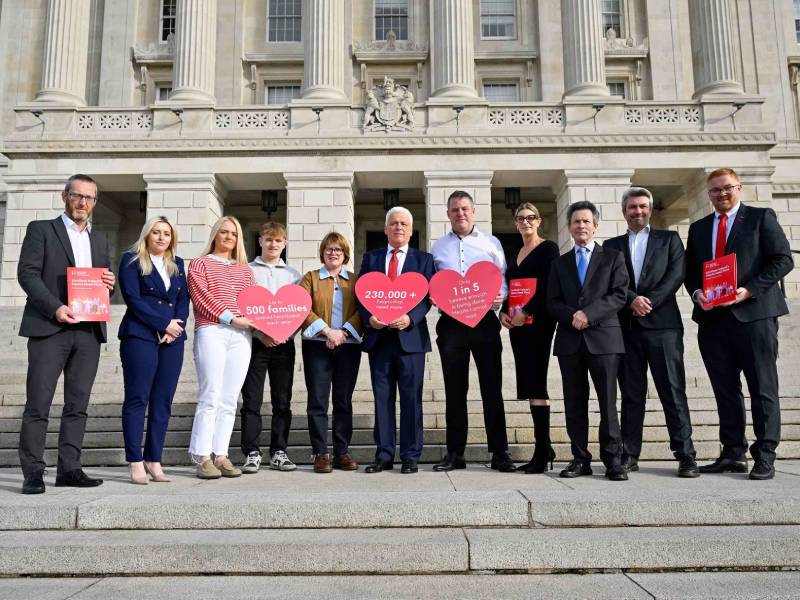
Our BHF Northern Ireland team has launched a new report calling for urgent action to prevent cardiovascular disease and help save more lives.
On 20 October, our Northern Ireland team launched a new report at Parliament Buildings calling for greater action to prevent cardiovascular disease and save lives. Northern Ireland’s Hearts Need More: Making prevention a priority sets out how stronger prevention could spare hundreds of families the heartbreak of losing a loved one too soon.

The scale of the challenge is stark. More than 230,000 people in Northern Ireland are living with cardiovascular disease, while around 4,400 people die from it every year.
In 2024, 1,330 people died from cardiovascular disease before the age of 75, the highest annual number of premature cardiovascular deaths in Northern Ireland since 2010.
But many of these deaths are not inevitable.
The NI Hearts Need More report estimates that up to 2,500 premature cardiovascular deaths could be prevented over the next Assembly mandate, with stronger action potentially preventing up to 500 people dying prematurely each year.
Ahead of the 2027 Assembly election, we’re asking every political party in Northern Ireland to commit to reducing premature cardiovascular deaths and put prevention at the heart of their plans. We’re calling for three practical changes:
This matters because around 70% of the cardiovascular disease burden is associated with modifiable risk factors. An estimated 400,000 people in Northern Ireland have high blood pressure, including as many as 100,000 who may not know they have it.
Fearghal McKinney, Head of BHF Northern Ireland, said:
“Behind these figures are hundreds of families who could be spared the heartbreak of losing someone they love too soon. CVD remains one of Northern Ireland's biggest killers, but too often we are waiting until people become seriously ill instead of finding and managing their risk earlier.
“With an Assembly election approaching, every political party now has an opportunity to commit to a healthier future by making the prevention of CVD a priority.
“Northern Ireland does not lack the evidence to act. What we can't afford is to wait.”
At the heart of the campaign are families who know first-hand the devastating impact cardiovascular disease can have.


The Huffington family from Portstewart are also sharing the story of their much-loved husband and father Garry, who died suddenly following a heart attack. They hope their experience will encourage other families to understand their cardiovascular risk and family history.
Their stories are an important reminder of what sits behind the statistics, and why earlier identification and prevention matter.
Prevention is at the heart of our BHF strategy. One of our three goals is to stop heart disease before it starts, by revolutionising how we prevent it. This campaign brings that ambition to life in Northern Ireland, working closely with healthcare professionals.
Prof Patrick Donnelly, Consultant Cardiologist and NI cardiac rehabilitation and prevention lead, said: “Northern Ireland is the only part of the UK without a strategic plan for the detection and management of cardiovascular disease, leaving people facing a postcode lottery in access to the services and expertise that could save their lives.

Read Northern Ireland’s Hearts Need More: Making prevention a priority and learn about the campaign

