

Heart failure hospital visits rise to record high, finds CVD Observatory


The number of people visiting hospital due to heart failure in the UK has risen to a record high, our new national cardiovascular disease (CVD) Observatory has found.
Hospital visits for the condition rose by 52% - from 173,744 to 264,417 - between 2014/15 and 2024/25, analysis from our new data platform reveals.
The increase is over twice as fast as overall hospital visits which have risen by 20% in the same period.
With heart failure patients staying in hospital around 10 days – double the average - the rise is adding enormous pressure on an already-overstretched NHS.
Concerning trend
Today’s analysis comes from our new CVD Observatory: the first ever cardiovascular disease data and insights platform that provides the clearest picture yet of UK heart health.
The new platform will grow to be a one-stop-shop for cardiovascular data to support decision-making related to the detection, prevention and treatment of heart and circulatory conditions, including heart failure.
Over one million people in the UK have heart failure, a long-term, life-limiting, and often debilitating condition in which the heart can’t pump blood around the body as well as it should. Someone may need to go to hospital with heart failure for several reasons, including breathlessness, chest pain, or significant fluid retention.
Professor Bryan Williams OBE, our Chief Scientific and Medical Officer, said: “Most hospital visits for heart failure could be prevented, so today’s analysis from our newly launched CVD Observatory shows the need to diagnose and treat this common condition earlier, so it can be managed more effectively.
“Being able to spot concerning trends like these is crucial as it highlights where the cardiovascular burden on the NHS is greatest, and where action can be most effective. We hope our new CVD Observatory will play an important role in revealing hidden patterns and bottlenecks, where inequalities lie, and where pressures are building.
"This is particularly important as the Modern Service Framework for Cardiovascular Disease is implemented in England. Accessible data on trends in outcomes will help us see where national policy is driving improvement, and, just as importantly, where it isn’t. Ultimately, this could unlock better heart care for everyone."
Diagnoses could double by 2040
The increase in hospital visits is reflective of the UK’s ageing and growing population, more people surviving heart attacks, and stark health inequalities. In addition, the data suggests that heart failure diagnoses will double by 2040.
We say the UK needs better ways of diagnosing and treating heart failure at an earlier stage, as well as better management in the community to keep people out of hospital, reduce pressure on the NHS, and bring down costs.
Research suggests up to 80% of heart failure diagnoses in England are made in hospital, despite 40% of patients having symptoms that should have triggered an earlier diagnosis. Rises in UK heart failure hospital visits between 2014/15 and 2024/25 were steepest in England at 58%.
We are currently funding £81million of cutting-edge research into heart failure, including the MRC/BHF Centre of Research Excellence in Advanced Cardiac Therapies. The centre, co-funded with the Medical Research Council, aims to develop novel therapies that will regenerate injured hearts and reverse established damage.
Introducing the CVD Observatory
We have launched the CVD Observatory as a trusted source of data, to help shine a light on where the burden of cardiovascular disease is greatest and where action is most needed.
When data is fragmented, it is harder to see the full picture, says the BHF. Important trends can be missed, inequalities can remain hidden, and decisions on prevention or care can take longer than they should.
The CVD Observatory's long-term aim is that the platform can help focus attention where it’s needed most and inform evidence-led decisions that can make the greatest difference for patients.
Rony Arafin, our Director of Health Insights, said: “Our CVD Observatory gives clinicians, researchers and policymakers a much better view of the nation's heart health.
“By bringing data and insights together in one place, we can see where care is falling short and where earlier action could make the most impact. By understanding these patterns, we can focus attention on where there is the greatest opportunity to improve care, prevent disease and save lives.”
Szandra's story
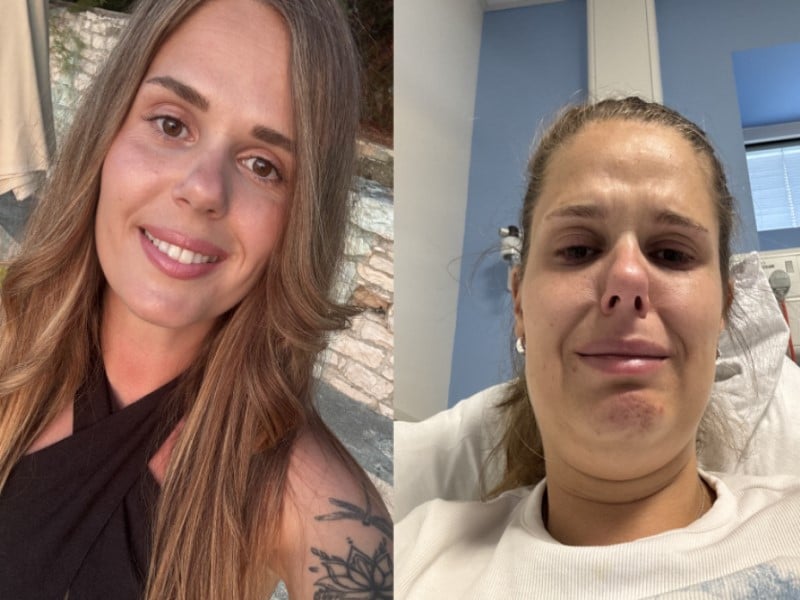
Thirty-five-year-old Szandra Tar, from Grangemouth, never suspected that she might have heart failure when she started getting muscle aches in her right shoulder at the end of 2024.
The previously fit and healthy mum-of-two had an active lifestyle, regularly playing volleyball, so aches weren't unusual. But by early 2025, she could no longer walk or run a short distance without getting out of breath.
She phoned her GP in June 2025 and was told it was either due to over-exercising, or anxiety, and was prescribed medicines that unbeknownst to her can make heart failure worse.
By July 2025, she couldn't climb a flight of stairs without having to stop to take a breath, and her face started to swell.
"I looked like I'd been stung by a bee," said Szandra, who works for Police Scotland as a civilian in the evidence department. "My belly was huge. I couldn't get on the trousers I'd been wearing a week before. I couldn't sleep; I woke up in the night gasping for air."
She phoned her GP again but was initially told the swelling was due to the heat, or due to antibiotics she'd been taking. It was only on listening to her chest that the doctor noticed she had an abnormally fast heart rate at rest and sent her to hospital.
She was admitted and spent the next 11 days on the cardiology unit at Forth Valley Royal Hospital where she was diagnosed with heart failure.
'I asked if I was going to die'
Szandra added: "My relationship had just ended, so I thought that may be the cause. I was shocked when they said I had heart failure and that my heart muscle was severely weakened and damaged. I asked if I was going to die and they told me they'd try their best to make sure that doesn't happen. You can imagine how that felt with two young children at home."
In hospital, she was fitted with an implantable cardioverter defibrillator (ICD) and put on medication that she'll need to take for the rest of her life.
She later underwent genetic testing which revealed she has a genetic variant which can cause dilated cardiomyopathy, a disease of the heart muscle where the heart chambers become enlarged and the heart muscle comes thinner and weaker. Her children are now being tested to see if they have the gene variant that causes the condition.
Szandra said: "It scares me that if I hadn't phoned the GP that day last summer, I may have fallen asleep that night and never woken up again because my heart was really struggling to pump blood which is why I was retaining so much fluid.
"I want to be an advocate for young people with heart failure, especially women, because there are unfortunately a lot of us out there and our symptoms can get overlooked. It took such a long time for me to get diagnosed despite me having serious symptoms for over six months. It doesn't have to be like this."