

A blood test could reveal those most at risk from genetic heart condition

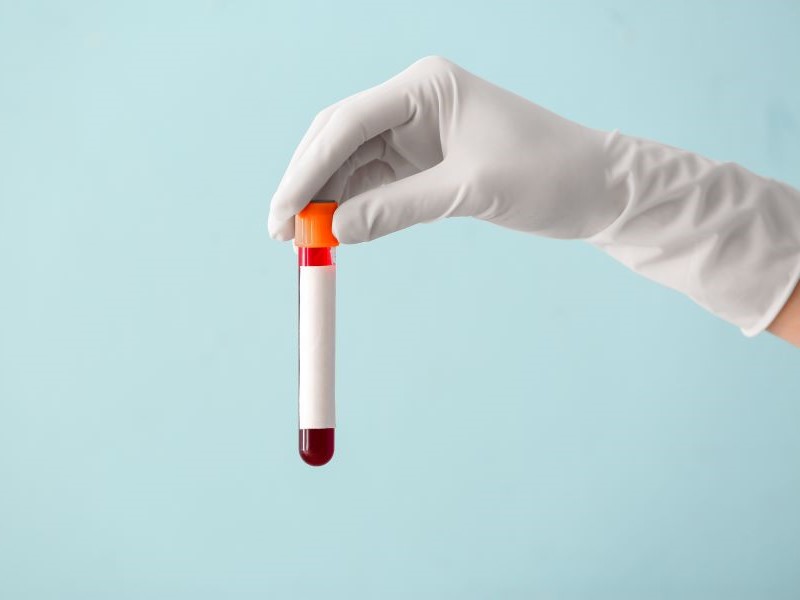
A simple blood test could help to forecast future risk for people living with a serious condition, according to research funded by us and published in Circulation: Heart Failure.
Lifesaving treatment
The test could identify people most in danger of future complications from hypertrophic cardiomyopathy (HCM) – the most common inherited heart condition - allowing them to rapidly receive lifesaving treatment.
In the study, researchers measured a protein called N-terminal Pro-B-type natriuretic peptide (NTpro-BNP) in the blood of people with HCM.
The NTPro-BNP protein is released by the heart as part of normal pumping, but high levels are a sign that the heart is working too hard. Those with the highest level of the protein were found to have changes in their heart which could lead to complications including atrial fibrillation and heart failure.
Researchers hope a blood test measuring NTPro-BNP could be available for people with HCM in around ten years.
Currently no cure
Approximately one in 500 people in the UK have HCM, and there is currently no cure. It is often caused by a change or mutation in one or more genes which can make the muscular wall of the heart thick and stiff, so that it has to work harder to pump blood around the body.
While some people have no symptoms, others can go on to develop complications, such as heart failure and abnormal heart rhythms (arrhythmias), which can then lead to a cardiac arrest.
In the study, researchers led by Professor Carolyn Ho at Brigham and Women’s Hospital and Harvard Medical School, measured 275 different proteins - including NTpro-BNP - in blood samples from 700 people who were at different stages of HCM. The group were tracked for an average of six years to see how their heart health changed over time.
People with HCM who had higher levels of NTpro-BNP were more likely to have poorer blood flow out of their heart and more scar tissue. These changes are associated with future complications such as heart failure and atrial fibrillation.
Next, the team plans to carry out larger studies examining thousands of blood tests from people with HCM and study a wider range of proteins.
"Reduce future risk"
Professor Bryan Williams, our Chief Scientific and Medical Officer, said: “After a diagnosis of HCM, patients and their families want to know what the future holds. This study shows that measuring various proteins circulating in the blood could help predict how the heart is functioning and future risk of complications from heart disease.
"This new method may also provide insights in the evolution of the structure and function of the heart in people with HCM that could point to new ways of treating this condition to reduce future risk. We are delighted that BHF funding, including from our £30m CureHeart programme, is helping scientists to pioneer transformative advances that could benefit patients around the world.”
"Better care for our patients"
Professor Carolyn Ho, Medical Director of the Cardiovascular Genetics Center, Harvard Medical School, said: “We hope that our research can help us better understand HCM and, as a result, help us better care for our patients.
"We have an ever-growing library of technology available to us. By using many different approaches, we can work toward unravelling why some people are susceptible to developing serious outcomes from HCM and some people are not. With this information, we will be better able to target the right therapies to the right patients at the right time.
“In future, we hope to offer our patients a blood test to identify who is at high versus low risk of experiencing serious consequences of the disease. People with the highest risk could be targeted for potentially lifesaving treatments as they stand to receive the greatest benefit, while those at lowest risk could avoid unnecessary treatment.”
Professor Stephan Neubauer, Head of the Division of Cardiovascular Medicine at the University of Oxford and one of the study co-authors, said: "This study, involving around 700 people at different stages of HCM, measured the level of 275 different proteins in their blood. These people's health was then tracked over an average of six years.
"We found that those with higher levels of 15 different blood biomarkers were more likely to later develop heart rhythm problems. They also had more severe changes in the heart’s structure, including a build-up of scar tissue, a key process that contributes to heart failure.
"One of these markers was NTpro-BNP, which is currently only used by doctors to diagnose heart failure. However, the other proteins of interest identified in this study can also suggest new mechanisms that might be important for understanding and potentially treating HCM in the future."
"Feel more in control"
Lara Johnson, now 34, started experiencing symptoms of breathlessness and fatigue in summer 2017. After six months she went to see her GP who did an ECG which didn’t look normal and was referred for hospital tests. She was diagnosed with inherited Hypertrophic Cardiomyopathy (HCM) in Dec 2017. Over the coming months many of her family on her Dad’s side were also diagnosed with HCM.
Lara said: ''One of the hardest parts of living with HCM is the constant uncertainty, never knowing what might change next. A simple blood test, which could help identify future risks earlier, would take away so much of that anxiety. It could give people like me a chance to prepare and adjust our lifestyles as needed, and help us to feel more in control. That kind of clarity wouldn't only help me, it would make a world of difference for my whole family."