

Search
There are 7119 result(s) for Angina and living life to the full
-
Running during pregnancy
We’ve teamed up with Full Potential to offer you a guide to the highs and lows of running with a baby on board, and the importance of listening to your body.
-
RESEARCH
Safe guarding the cell’s energy sources to protect the heart during a heart attackUniversity College London | Professor Derek Hausenloy
Ischaemic heart disease commonly presents as a heart attack due to a blockage in one of the main heart arteries, depriving the heart muscle of oxygen and nutrients resulting in heart muscle injury. New treatments are required to protect the...
-
PUBLICATION
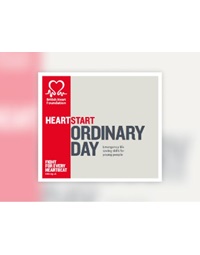
Ordinary day DVDDVD, 40 minutes, published on 01/03/2017
This DVD is supports Heartstart schemes teaching life saving skills to children and young people. This resource illustrates specific emergency life support skills.
This publication is only available to download or view online
Want to order more?
This publication maximum quantity order is 5. Get in touch and we can help if you want to order over the maximum allowed quantities of any booklet or guide. -
RESEARCH
Understanding how the heart adapts to high blood pressureUniversity of Reading | Professor Angela Clerk
High blood pressure puts strain on the heart and, if untreated, can cause permanent changes to heart cells which may later lead to heart failure. These changes are controlled by signals between and within heart cells, some of which influen...
-
RESEARCH
How do ADAMTS contribute to damaging changes to the extracellular matrix in heart disease?King's College London | Dr Javier Barallobre Barreiro
Researchers at King’s College London are studying why the mesh of proteins around the heart changes in heart disease. During heart failure the heart can’t pump strongly enough to respond to the demands of the body. It is a life-limiting ...
-
RESEARCH
How the brain and cardiovascular system communicate: implications for diseaseUniversity College London | Professor Andrew G Ramage
Information about your blood pressure and heart rate is continuously sent to a specialised area of your brain via nerves. Processing of the information arriving in the brain concerning blood pressure and heart rate involves the release of c...
-
RESEARCH
Investigating the potential to control blood vessel growth in diseaseUniversity of Nottingham | Professor David Bates
Throughout our life, new blood vessels grow to maintain a healthy circulatory system – a process called angiogenesis. However, the formation of new blood vessels can also occur in conditions such as heart disease and diabetes and can lead t...
-
RESEARCH
Enhancing the body’s natural anti-clotting system to treat thrombosisImperial College London | Professor James Crawley
Blood clotting is highly coordinated and involves processes that promote clotting and others that inhibit it. One of the body’s natural clot-inhibiting pathways is called the “TFPI-protein S anticoagulant system”. In this system, the TFPI...
-
Incidence and prevalence - comorbidities - coronary heart disease
Coronary heart disease patients living with other long-term health conditions.
-
Leeds researchers awarded new grant to study the structure of deadly blood clots
Scientists in Leeds, funded by the British Heart Foundation, are to study the structure of blood clots, to help prevent heart attacks and improve treatment.