How writing about your health problems can help your recovery
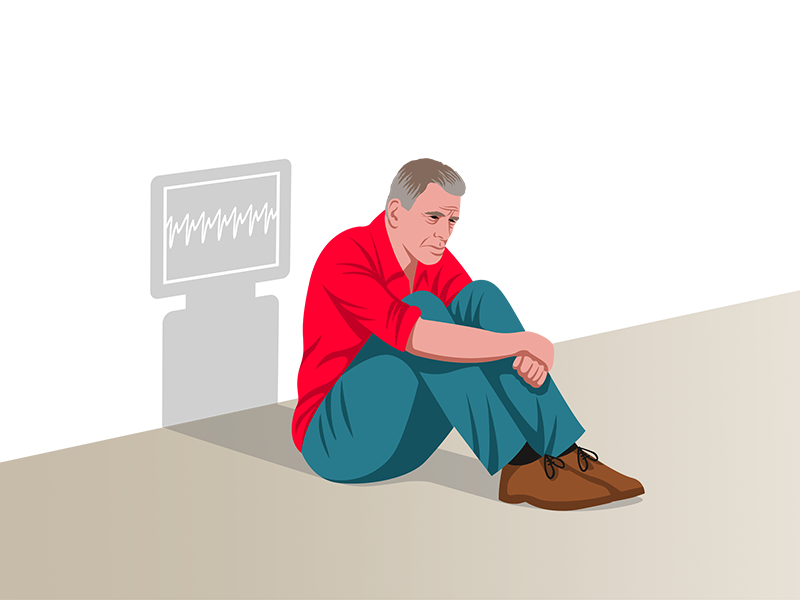
After experiencing a heart event, it can be hard to open up to the people around you. Two experts tell Sarah Brealey about the benefits of writing and how to get started.
Published:
Published:
Fiona Hamilton, a writer and facilitator who runs writing for wellbeing courses and mentoring sessions in the NHS and community settings, says writing can be a useful way to describe your experiences.
“As humans, we tell stories about our lives,” she explains. “Writing is an opportunity to find ways of narrating the experience, to ourselves and others.
“When your life has been changed by an illness, when you can’t do things you used to, or maybe you’ve gained an understanding of what matters in life, writing can help. Illness and challenge often involve feelings of changed identity, and writing can be used to understand, in a safe space: ‘How am I going to tell my story?’”
Illness and challenge often involve feelings of changed identity
Fiona Hamilton
Writing can be especially helpful if it doesn’t feel easy to talk to friends and family. “Talking to loved ones may not be straightforward; you may feel you don’t want to burden them,” she says. “Alternatively, people may not fully understand your situation or might want to hear that everything is better now.”
Claire Williamson is the Programme Leader for MSc in Creative Writing for Therapeutic Purposes at the Metanoia Institute, and works as a creative writing facilitator. She says writing about your health experiences can bring multiple benefits. “People often understand their experiences better as a result of writing about them.
"It’s a way of becoming an expert on your experience,” she says. “It doesn’t remove the pain, but you can get a sense of making something whole out of something quite messy.”
Even if writing upsets you at the time, as you relive a negative experience, it can help you feel better afterwards. There’s evidence of the benefit that writing about your emotions and experiences can have on your physical health.
Small studies of heart attack patients have found that those who wrote about their feelings on having a heart attack had a higher health-related quality of life than those who wrote about neutral topics.
Ms Williamson says writing can also be a calming process. “People usually become calmer when they write, or read out their writing. This can help you feel less anxious, which is especially useful if you have symptoms of anxiety, such as panic attacks.”
Getting started with writing
Any form of writing can have benefits. “Sometimes poetry is useful because you can get a lot of emotion in a small space. Others may feel they need to get the whole thing out, so a longer form is better,” explains Ms Williamson.
If you belong to a writing group, having other people hear what you’ve been through can also help, as your feelings are heard and accepted.
There are no rules about how you write, although Ms Williamson encourages specificity and figures of speech. “Don’t just say you feel sad, anxious or isolated, but ‘like a puppy left out in the rain’. It gives you a frame of reference – rather than just feeling sad, you are thinking about the puppy and relating to that.”
To find out more, or to support British Heart Foundation’s work, please visit www.bhf.org.uk. You can speak to one of our cardiac nurses by calling our helpline on 0808 802 1234 (freephone), Monday to Friday, 9am to 5pm. For general customer service enquiries, please call 0300 330 3322, Monday to Friday, 9am to 5pm.
British Heart Foundation is a registered Charity No. 225971. Registered as a Company limited by guarantee in England & Wales No. 699547. Registered office at Greater London House, 180 Hampstead Road, London NW1 7AW. Registered as a Charity in Scotland No. SC039426