Eat well

Porridge: is it a healthy breakfast?
A humble bowl of porridge is one of the healthiest breakfasts you can enjoy – providing you prepare it correctly. BHF Senior Dietitian Dell Stanford explains why it can help to protect you against heart disease and high cholesterol.
Page updated:

Page updated:
What is porridge?
Porridge is a warm cereal food that is made by soaking and cooking grains in liquids such as milk or water until they soften and have a thick, creamy texture.
It’s one of the oldest cooked foods eaten by humans and is nutritious, easy to make and affordable.
While British people traditionally make porridge with oats and water or milk, and enjoy it at breakfast time, there are variations around the world.
This includes congee in China – a savoury version made with rice – and sweet cornmeal porridge in Jamaica.
Oatmeal is simply the American name for oat porridge, as well as ground oats like oatmeal flour.
There are many varieties of oats, such as groats, rolled and steel-cut. Porridge oats tend to be rolled oats and can either be jumbo or smaller and thinner.
They offer the same nutritional benefits, but the difference between them lies in texture and cooking time. The more finely processed they are, the quicker they cook.
Is porridge healthy?
Porridge is a healthy meal because all porridge oats are wholegrains and are a high-fibre food.
Research has linked eating plenty of fibre with a range of health benefits, including a lower risk of cardiovascular disease (CVD) and type 2 diabetes.
A 40g serving of oats provides around 3g of fibre, and it has 7.5g per 100g, which meets the requirement of at least 6g per 100g to be called a high-fibre food under UK nutrition and health claims laws.
The average adult only eats around 16g of dietary fibre a day, but UK government guidelines say adults should increase this to 30g a day.
People who survive a heart attack have a greater chance of living longer if they increase their fibre intake.
Here’s a quick look at the average nutritional content of oats and a standard bowl of homemade porridge:
Average nutritional content of oats and porridge
Source: Nutritics
| Nutrient | 40g oats | Porridge (40g and 250ml semi-skimmed milk) |
|---|---|---|
| Kcals (calories) | 157 | 279 |
| Fat (g) | 3.2 | 7.6 |
| Saturated fat (g) | 0.5 | 3.3 |
| Carbohydrate (g) | 26 | 37 |
| Sugar (g) | 0 | 12 |
| Fibre (g) | 3.1 | 3.1 |
| Beta-glucan (g) | 2 | 2 |
| Protein (g) | 4.7 | 14 |
| Salt (g) | 0 | 0 |
| Potassium (mg) | 148 | 574 |
Can porridge help lower cholesterol?
The oats in porridge contain a soluble fibre called beta-glucan, which forms a gel in the gut that helps reduce cholesterol absorption.
Consuming 3g or more of beta-glucan daily, alongside eating a healthy, balanced diet, has been shown to lower your cholesterol levels.
Eating a bowl of porridge made with 40g of oats provides about 2g of beta-glucan, so you could add a 250ml glass of unsweetened oat milk to help you reach the full amount.
But you need to check that the brand of oat milk you buy contains 1g of beta-glucan per serving.
Can porridge help you lose weight?
If you are trying to lose weight, porridge can be a nutritious low-calorie breakfast as part of a balanced diet.
Choosing to make your porridge with water, low-fat dairy milk or an unsweetened plant-based alternative can help to reduce calories and saturated fat.
Avoid adding high-sugar toppings, like syrup or honey. A tablespoon of golden syrup adds 60kcal and about 16g of sugar – more than half the maximum daily intake (30g) of free sugar for adults.
Maple syrup and honey may sound natural, but they are not any healthier and the sugar content is very similar.
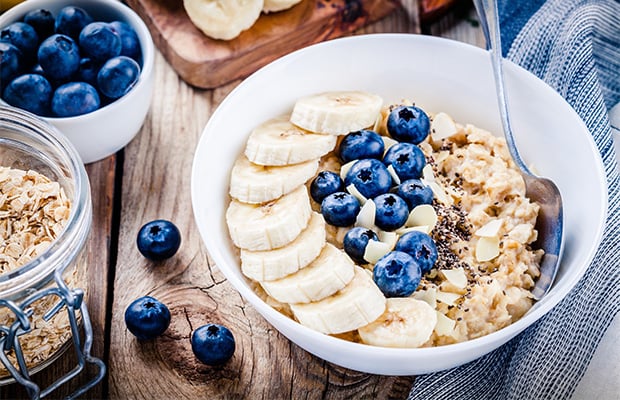
For extra flavour, try fruits, spices like cinnamon, or nuts and seeds.
They will add sweetness without sugar, boost your fibre intake and contain additional nutrients, plus fruit toppings will help towards your 5-a-day.
Do not add the traditional pinch of salt as too much salt can raise your blood pressure over time.
The best way to control what’s in your porridge is to make it yourself, but instant porridge is fine if you stay away from flavoured or sweetened versions.
Even healthy-sounding flavours such as apple and blueberry generally contain added sugars, so always check the label for sugar, flavourings and even salt.
- Try these high-protein breakfast ideas that are low in calories.
How do you make porridge?
Porridge is not only good for you – it’s really simple to make.
- If cooking on the hob, put 40g of oats in a saucepan.
- Add 250-300ml of water, milk or a mixture.
- Bring to the boil, then simmer and stir until it reaches a creamy consistency. This is enough to serve 1 person.
You can also make porridge in the microwave, using the same ratios.
- Combine the ingredients in a heat-proof bowl.
- Cook on high for 3-5 minutes, stirring halfway through.
- Leave the porridge to cool for a couple of minutes before serving.

14 healthy toppings to put on porridge
The beauty of porridge is that there are endless ways to enhance the taste every morning. Here are 14 healthy options to tempt your tastebuds.
1. Banana, raisins and a sprinkle of nutmeg
These everyday ingredients make this porridge topping a real crowd-pleaser that is an easy and comforting choice.
2. Strawberries and blueberries
Great for the summer, fresh berries are a sweet, refreshing topping, making porridge taste extra creamy.
3. Cherry and chia seeds
Simmer frozen cherries on the hob or in the microwave with 1-2 tbsp of chia seeds, stirring regularly. Allow the mixture to cool before adding to your porridge.
The seeds help to naturally thicken the juices released by the cherries.
4. Banana, raspberry, almond butter and cinnamon
This combo will add some protein to your porridge thanks to the nut butter. Peanut butter will work instead of almond, but always choose a version without added sugar and salt.
5. Flaked almonds and chopped dates
Keep these in the store cupboard or in a jar on your desk to sprinkle over your porridge when you need them.
6. Walnuts, pear slices and ginger
If you like a crunchy texture, the pear and walnuts will add this, while a sprinkling of ground ginger adds some spicy warmth.
7. Peaches and raspberries
Recreate a peach melba with this classic combo. Depending on the time of year, you could use frozen raspberries and tinned peaches if that’s easier or cheaper than fresh.
Tinned and frozen fruit still count towards your 5-a-day. Just make sure that tinned fruit is in juice rather than syrup.
8. Stewed plums
These can be halved and either microwaved or baked in the oven using a covered dish. Add cinnamon or vanilla for extra flavour.
9. Blueberries, walnuts and sunflower seeds
These look pretty on top of your porridge, plus an 80g portion of blueberries counts as 1 of your 5-a-day, while the walnuts and sunflower seeds provide unsaturated fats as well as fibre and vitamins.
Use other berries if you prefer, or even dried apricots for a store cupboard alternative – in which case 30g will count as 1 of your 5-a-day.
10. Low-fat Greek yogurt and tinned apricots
Low-fat yogurt will be creamy without adding saturated fat, while the apricots (tinned in juice, not syrup) will add sweetness without adding sugar.
11. Stewed apple with cinnamon
Perfect for an autumn porridge – but you can also cook extra apple and freeze it in smaller portions to enjoy year-round.
12. Grated apple, blackberry and pecan
Grate up a little apple and stir into the porridge. Once it’s cooked, top with some blackberries and chopped pecans for extra crunch.
13. Chocolate banana
Mash up most of a ripe banana – the riper the better as it will add natural sweetness – then cook in with the oats and about 2 tsp cocoa powder (or to taste). Stir well and serve with the remaining banana sliced on top.
14. Blueberries and blackberries
Cook some of the berries with the oats to turn your breakfast an appetising shade of pink, and serve the rest scattered on top.
What to read next...