Understand health
Blocked arteries: what are the signs and symptoms?
Paul Whittaker spent his life climbing the corporate ladder. But at 51 he had to have heart surgery. Now 70, he fills his life with the things he loves.

“I never thought I’d be the one sitting in a cardiologist’s office being told I needed quadruple bypass surgery.
Heart disease was something that happened to other people – older men, heavy smokers, those who didn’t look after themselves. Not me.
I was 51, fit, not overweight, only a social smoker. I’d spent my life working hard, climbing the ladder in banking until I was managing nearly 3,000 staff in 100 branches across Manchester.
Work was everything. I did 16-hour days and thrived on the pressure: on being the one who could handle the tough jobs. I thought that made me strong.
In 2007, my partner Lynne (pictured above) and I went to Tuscany in Italy. During the holiday, I proposed and she accepted.
But while we were there, I felt a strange discomfort in my collarbone. It wasn’t pain exactly, but it left me short of breath. Lynne insisted I get it checked when we got home.
Within weeks, I was sitting in front of a cardiologist, who diagnosed me with angina caused by coronary heart disease.
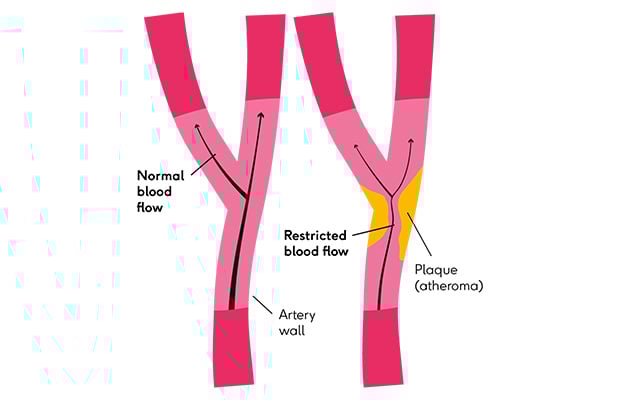
Fatty material had built up in the blood vessels of my heart, leading them to become narrowed or blocked, putting me at high risk of heart attack and stroke.
The cardiologist looked me straight in the eye and said we were going to be very good friends because I needed to have a quadruple bypass.
The words hit me like a hammer because I didn’t have any risk factors for angina, like high blood pressure or high cholesterol.
But I had a stressful job, I was a social smoker and my mother had angina at a young age too. I remember thinking, ‘If it’s got me this young, it must be serious’.
Lynne had lost her father to cancer just weeks earlier, and now she was facing the possibility of losing me as well. It felt like the ground had shifted beneath us.
On 5 November 2007, I had my quadruple bypass surgery. The team would need to take blood vessels from my chest or legs and graft them into my heart, creating 4 new routes for blood to flow around (bypass) the narrowed or blocked arteries.
Going into theatre, the anaesthetist was joking with me that the drugs were like ‘pints of beer’. I laughed, but inside I was terrified.
I trusted the surgeons and medical team, but I couldn’t shake the thought: ‘What if I don’t wake up?’
I did wake up, 12 hours later, finding myself in intensive care. I was on a ventilator, surrounded by glowing monitors in the dark. It felt eerie, otherworldly. Relief washed over me: I was alive.
But I later learned that my heart had gone into a dangerous supraventricular tachycardia (SVT) rhythm during surgery and had to be shocked back.
That knowledge stayed with me. I realised how close I’d come to not surviving.
Recovery was painful. Nurses taught me to cough again by clutching a pillow, or in my case, a soft toy called Ice Bat. It sounds almost childlike, but that toy became a symbol of survival.
Every cough hurt, but every cough also meant that I was healing.

Paul used a soft toy called Ice Bat to help him cough after his operation.
Daniel, my then 8-year-old stepson, became my walking companion. He understood the seriousness of it all and took responsibility far beyond his years.
Those walks with him weren’t just exercise – they were moments of bonding, of hope.
We bought Hamish, a West Highland Terrier, to keep me walking. He was my companion for 15 years and now my current pet, Freddy, has taken his place. Dogs became part of my healing, pulling me forward when I might have stayed still.
At times it felt tough. Then slowly but surely, I regained my fitness. By June 2008, I’d completed cardiac rehab and was climbing a Scottish mountain with my family.
Two months later, Lynne and I married in a small ceremony with 17 guests. We’d survived the storm and we wanted to celebrate life together.
Going back to work was harder than I expected. A change in management left me feeling unsupported and I realised I didn’t want to spend the rest of my life stressed by corporate politics.
At 53, I took early retirement. It was a huge decision, but the heart bypass surgery had changed my priorities.
I wanted to be stressed about things that mattered: family, health, happiness – not meetings and targets.
Lynne and I moved to the countryside. She found joy in fundraising for good causes.
And I began volunteering, mentoring small businesses and emptying charity collection boxes.
We built a new life centred on community and balance.
My mantra now is ‘everything in moderation’. I love dog-walking, fly-fishing, playing piano and travelling.
I’ve become a coffee enthusiast, with a proper espresso machine and European trips to find the best roasters.

I was 70 earlier this year and I am enjoying celebrating that milestone.
I’d love to catch a 15lb salmon and finally attend a concert at the Royal Albert Hall in London.
My ultimate ambition is to outlive my parents, who reached their mid-80s, and maybe even crack 100.
The heart bypass surgery saved my life, but more than that, it changed it. It forced me to stop, to reassess, to put myself and my family first.
Without it, I’d probably have worked until I dropped.
I don’t share my story to boast. I share it because I want people to see what’s possible.
If you’re facing this surgery, don’t hesitate. Get on with it. Just do it.
It’s terrifying, but nearly 20 years later, it’s like it never happened.
The life you get back – the walks with your child, the dog at your side and the chance to grow old with the person you love – is worth everything.”