Wellbeing
Adapting to life with a heart condition

Alice Odeke’s world was turned upside down when she was diagnosed with cardiac amyloidosis, a rare condition which has led to heart failure. The 58-year-old from Bromley, Kent, talks about how she learned to cope with an uncertain future and got her life back on track.

“In spring 2021, after the third Covid-19 lockdown, I noticed I was getting breathless. My niece commented that I was puffing and panting when going up stairs.
Before this, I had enjoyed years of good health. I cycled from London to Paris, London to Amsterdam and even walked from London to Brighton for charity.
I was putting on weight and my joints were uncomfortable or painful. I went to see my GP, which started months of tests and long stays in hospital, as doctors tried to find out what was wrong with me.
I was initially prescribed beta blockers but at that point doctors did not know what they were treating.
From April to August, I was in and out of different hospitals. It went on so long that I worked from my hospital bed – I’m an architect.
Then one day, in August – I will always remember this – the consultant cardiologist came, shook my hand, and said, ‘I think we know what is wrong with you. You’ve got cardiac amyloidosis’.
I had never heard of amyloidosis. I looked it up and the outlook did not look good. Not much is known about it, except that it is a rare condition where proteins in your body start to build up as sticky deposits that can damage tissues and organs.
Treatment has improved, but there is no cure. By then, I was more breathless and weaker, and Covid-19 hospital restrictions meant my family could not visit.
I wondered how long I had left to live
I shared my news with a kind lady who I’d met on the ward, but she was leaving that day. Trying to take it all in while I was alone was very hard. I started wondering, ‘How long do I have to live?’
In my case amyloidosis had affected my heart. Abnormal amyloid proteins are produced in the bone marrow and for the type I have, called AL amyloidosis, treatment is normally chemotherapy to stop more abnormal proteins being produced.
I had several rounds of chemotherapy over seven months. I was so unwell; sick, tired and weak, and was still in and out of hospital. When at home, I had to crawl up and down the stairs on my hands and knees.
I was born in Uganda and lived there until about the age of 10, when the whole family came to Europe. My father’s job first took us to Belgium and later I came to boarding school in the UK. I had to adapt to a new continent, cultures and education systems.
I put my ability to adapt to becoming ill down to that time. I immediately told my family and friends. Culturally we accept life and death are close: you cannot have one without the other. It meant we were able to discuss openly the impact of the condition on my life.
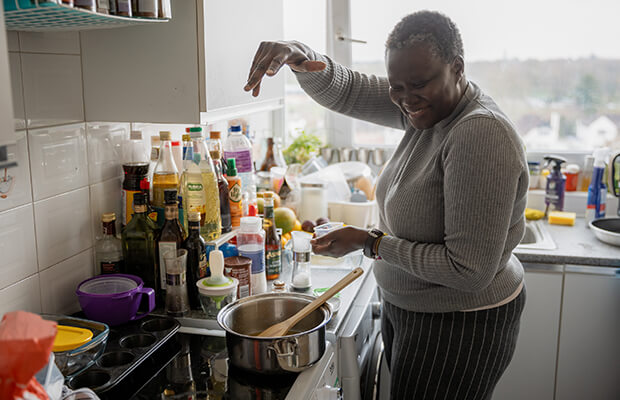
My oldest sister moved in with me to help with cooking and cleaning, and she came to hospital appointments with me. She is very practical and thought of all the things I needed to get sorted out.
She studied environmental change and disaster management – my six siblings and I call her our ‘disaster management coordinator’. My youngest sister, her husband and all my brothers visited from abroad and helped.
Basically, everybody rallied round, including friends who had clinical knowledge and that really helped me to interpret, understand and accept my situation.
My chemotherapy ended in February 2022. Tests showed it had worked well, and the amyloids were starting to clear from my body.
But the build-up of amyloids that had already happened in my heart means that one of my heart valves does not close properly, meaning my heart has to work harder.
This has caused heart failure where my heart does not pump enough blood around my body, and I get very tired and breathless.
I now allow myself to do things differently
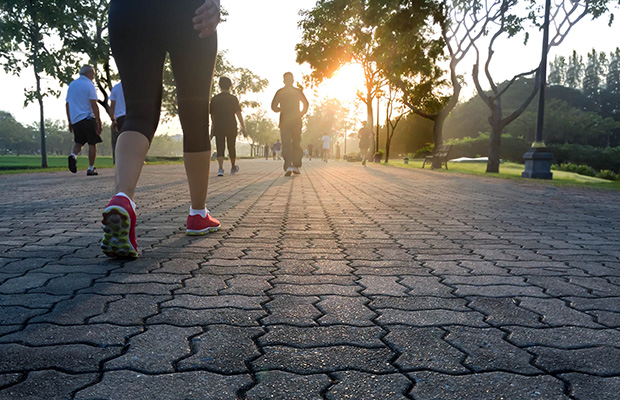
Now, my biggest struggle is walking. I often stride out from my house and within a few metres I slow down completely. I now give myself permission to do things differently. If I’m tired, I rest and take things easy.
For work, I took a philosophical view of how to do architecture differently. I minimised site inspection visits, which are physically tiring, and reimagined my career.
Now I feel inspired by my variety of jobs as a freelance architect, consultant, mentor and lecturer at the University of Westminster.
I may not know how long I have to live but I want to live as well as I can. I enjoy being here, being alive, and my glass is always half full.
There are things I used to take for granted that matter more now. It could just be sitting by a window watching the weather, or simple sounds.
Walking through London recently, I heard a magpie’s song for the first time. Little things in life have become more meaningful. I have a great life.”