


Manage blood pressure at home
Find all the information you'll need to measure and manage your blood pressure at home.
Blood pressure is the pressure of blood in your arteries. Your arteries are the vessels (tubes) that carry blood from your heart to your brain and the rest of your body. You need a certain amount of pressure to get the blood moving around your body.

Watch our video explaining blood pressure
Blood pressure is measured using 2 numbers:
Your blood pressure naturally goes up and down throughout the day and night, and it’s normal for it to go up while you’re moving about.
Learn what normal blood pressure readings look like.
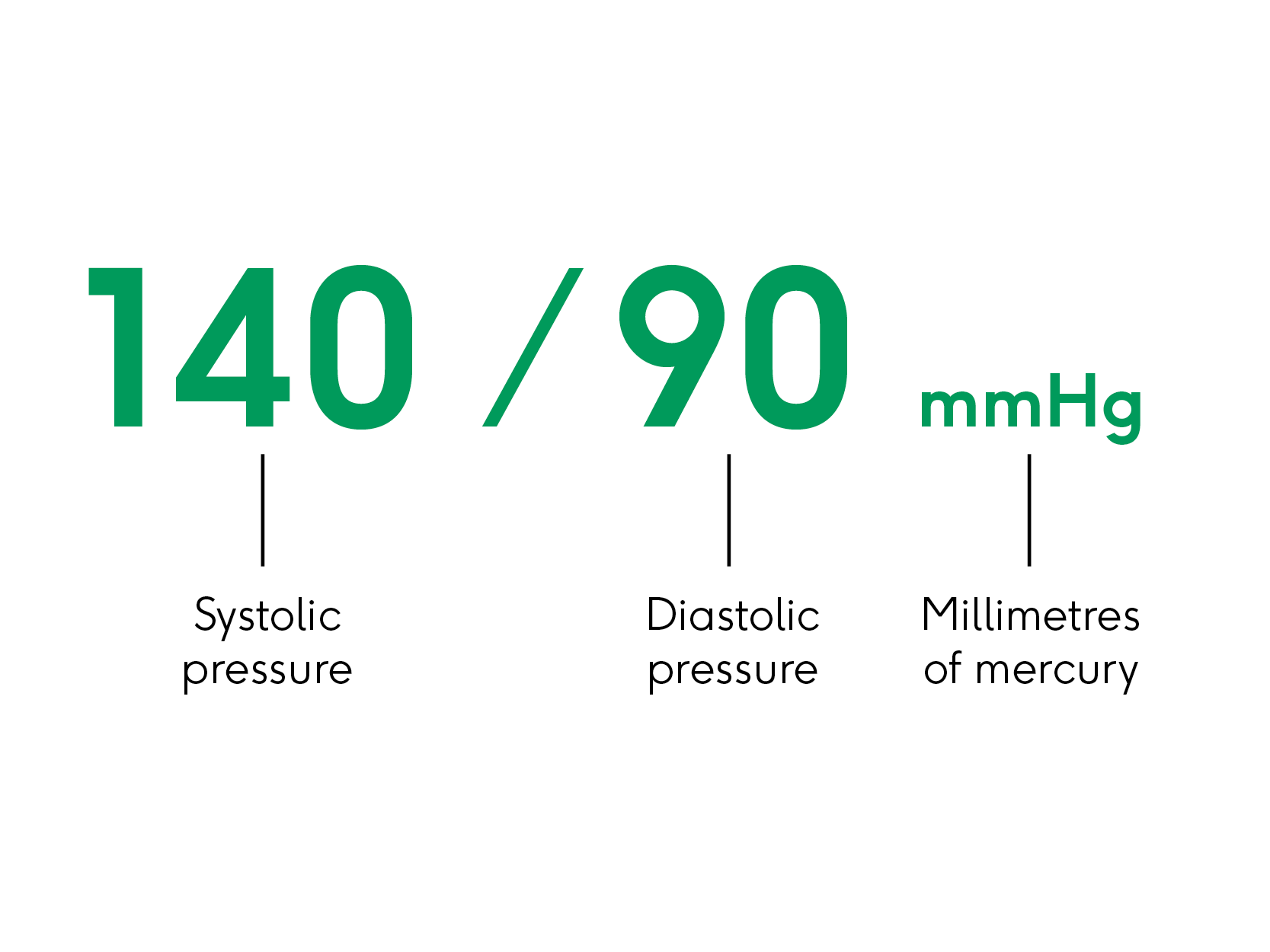
High blood pressure is when your overall blood pressure is always high, even when you are resting. For most people, high blood pressure is when your blood pressure is over 140/95 mmHg.
High blood pressure is a serious condition. If you do not get treatment, high blood pressure can cause complications like loss of vision and sexual dysfunction.
Your arteries are normally stretchy, so they can cope with your blood pressure going up and down. But with high blood pressure, your arteries lose their stretchiness, becoming stiff or narrow.
This narrowing makes it easier for fatty material (atheroma) to build up. This narrowing and damage to the arteries lining your heart or brain could trigger a life-threatening heart attack or stroke.
If left untreated, high blood pressure can also lead to conditions such as:
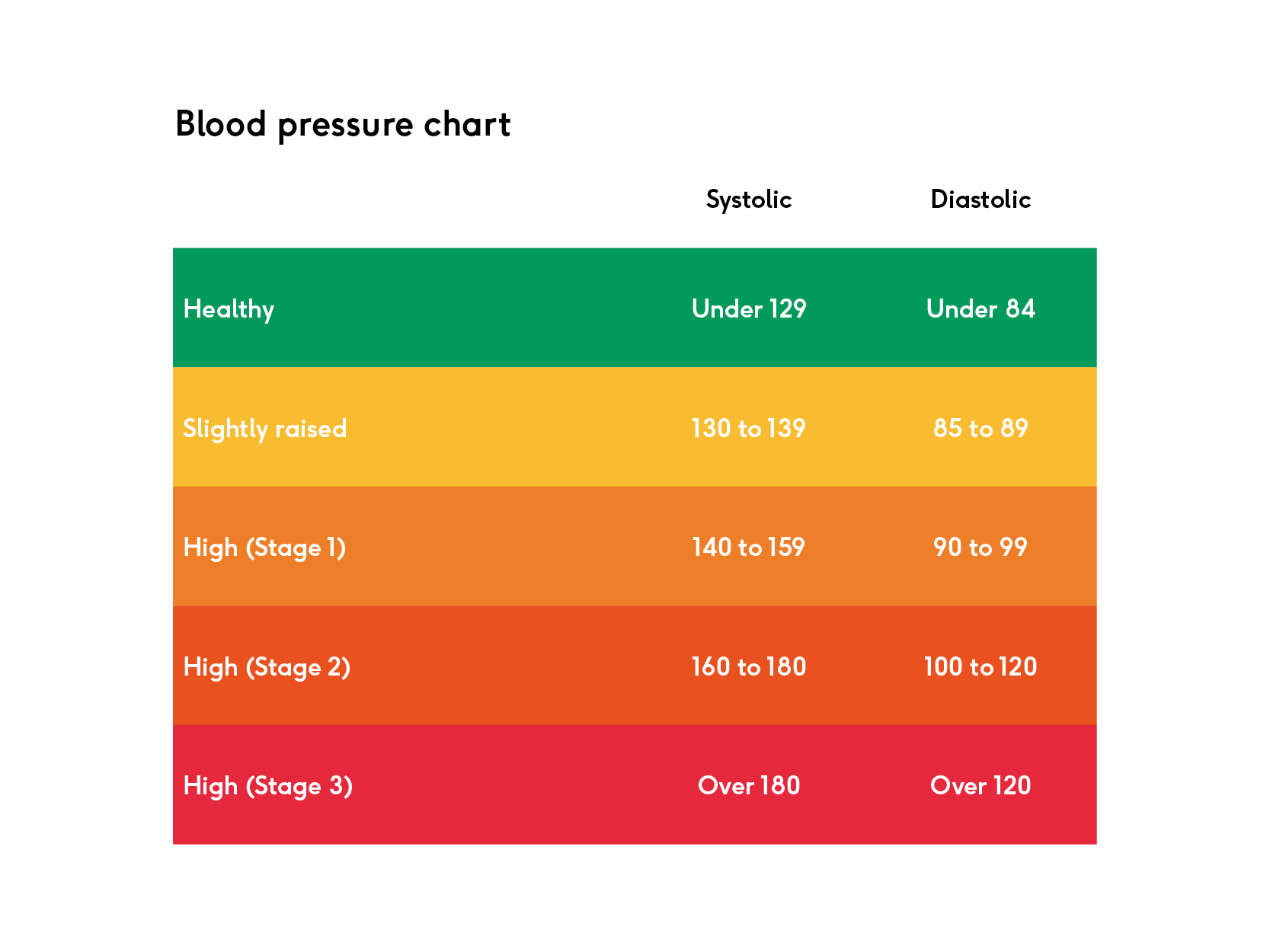
A chart showing healthy and high blood pressure readings
A normal, healthy blood pressure is usually between 90/60 mmHg and 130/ 85 mmHg.
Some people may have a slightly raised but normal blood pressure, called “pre-hypertension”. Pre-hypertension is when your blood pressure is between 130/85 mmHg and 139/89 mmHg.
If you’re over 80 years old, your blood pressure should usually be below 150/90 mmHg when checked by a healthcare professional or below 145/85 mmHg when checked at home.
Blood pressure readings and what they mean when you have your blood pressure measured by a healthcare professional:
Blood pressure reading |
Systolic |
Diastolic |
| Healthy |
Under 129 | Under 84 |
| Slightly raised | 130 to 139 | 85 to 89 |
| High blood pressure (stage 1) | 140 to 159 | 90 to 99 |
| High blood pressure (stage 2) | 160 to 180 | 100 to 120 |
| High blood pressure (stage 3) or "severe hypertension" | Over 180 | Over 120 |
If your blood pressure is over 135/85 mmHg when you measure it at home, you may be diagnosed with high blood pressure.
These are just guidance ranges. Discuss your readings with your healthcare team and ask any questions you have. Together, you might want to set a target blood pressure that’s right for you and your health goals.
High blood pressure usually has no symptoms. This means most people do not know they have high blood pressure. That's why it's so important to get your blood pressure checked regularly.
In rare cases, high blood pressure can cause symptoms such as:
In most cases, there is not a specific reason for the cause of high blood pressure, but there are things that can increase your risk. These include:
For some people, a cause of high blood pressure is found. This is known as "secondary hypertension".
Examples of secondary hypertension include:
If you are worried that any medicine or remedy might affect your blood pressure, ask your doctor or pharmacist about it.
Around 1 in 10 women develop high blood pressure during pregnancy. It is often caused by a condition known as pre-eclampsia. This increases the risk of long-term high blood pressure.
Research funded by the BHF found that lowering the blood pressure of birth mothers within 6 weeks of giving birth reduced their long-term risk.
As many as 5 million adults in the UK have undiagnosed high blood pressure and do not know they are at risk. The only way to know whether you have high blood pressure is to have it measured. You can measure your blood pressure at home.
You can also get your blood pressure checked at:
If you’re a healthy adult aged 40 to 74, and live in England, you’re likely to be invited to a free NHS Health Check every 5 years, which will include a blood pressure check.
You can also check your blood pressure at home. In England, a scheme called Blood Pressure @home is in place to support people with this, which you can ask your GP about. There is also a similar scheme in Scotland called the Scale-Up BP initiative. Ask your doctor about similar arrangements in other parts of the UK.
If you’re a healthy adult aged 40 to 74, it’s a good idea to get your blood pressure checked every 5 years. You may be invited for an NHS Health Check in England once you turn 40. There may be other services available in Scotland and Wales. Ask your GP about how you can get your blood pressure checked.
If you have been diagnosed with high blood pressure and it's under control, you’ll normally be monitored yearly, along with reviewing any medicines you take. When you start new medicines or have dose changes to existing ones, your blood pressure will need to be checked more than once a year.
Check with your healthcare team how often to measure your blood pressure at home if you have your own monitor. Try keeping a diary of your readings. This will help your healthcare team spot patterns, and it might be motivating to see how your blood pressure improves over time.

Watch our short video explaining how to take your blood pressure at home
Your blood pressure will usually need to be checked more than once to confirm a diagnosis of high blood pressure.
This is because blood pressure can go up and down a lot during the day. When people have their blood pressure checked in the clinic it can be higher than expected, especially if they feel nervous or anxious.
If your blood pressure is high in the clinic, you might be told to monitor it at home for a few days so they can calculate an average to see if you have high blood pressure. If it is dangerously high, you should seek urgent medical help.
You may also be given a 24-hr monitor to wear to check your BP. This is called ambulatory blood pressure monitoring, or ABPM.
By looking at all your blood pressure readings over a few days, your GP can work out what your 'average’ blood pressure is.
In some cases, your GP might want to run other tests as well. For instance, they might want to do blood tests to check your cholesterol levels and kidney function or check your heart rhythm with a test called an electrocardiogram (ECG).
There are lots of things you can do to help lower your blood pressure, such as:
Your GP can help you create a plan to reduce your blood pressure. By making lifestyle changes, you can lower your blood pressure and keep it at a healthy level.
This useful tool developed by the NHS helps you make a plan that you can discuss with your GP.

Watch our 2-minute video showing you simple food swaps to lower your blood pressure
Your GP may also offer you medicine to lower your blood pressure if it’s high or very high.

We also have high blood pressure information in Arabic, Bengali, Gujarati, Polish, Punjabi, Romanian, Urdu and Welsh.

We've followed an eight-step process to make sure this content is reliable, accurate and trustworthy.
Learn how we make our health content.
Find all the information you'll need to measure and manage your blood pressure at home.
This booklet can help you and your loved ones understand what high blood pressure is and how to make healthier changes to look after your heart health.
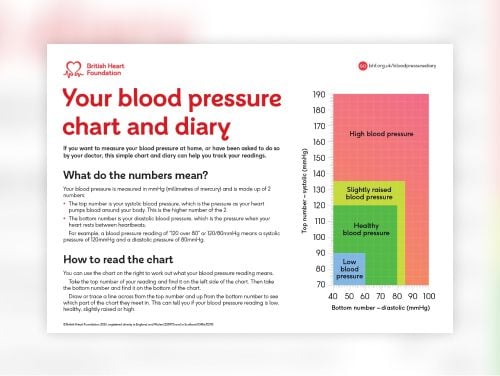
If you want to measure your blood pressure at home, this blood pressure chart can help you understand what your reading means.