

Science

Understanding the heart's conduction system
BHF-funded researcher Dr Alicia D'Souza (PhD) from Imperial College London explains how research into how the heart's electrical system keeps it beating could lead to a new gene therapy for heart failure.
Published:

Published:
What makes your heart beat?
The heart is often thought of as a pump, but the pump also has an electrical system that coordinates the heartbeat.
This is known as the ‘cardiac conduction system’, which is operated by pacemaker cells (specialised heart cells that make their own electrical impulses).
If the electrical system becomes faulty, you may develop a slow or fast heart rate or have an increased risk of developing an irregular rhythm (arrhythmia), such as atrial fibrillation (AF).
An abnormal heart rhythm also significantly increases your risk of developing heart failure.
What happens when the heart’s electrical system fails?
More than a third of people living with heart failure also have a fault in the heart’s electrical system, yet surprisingly little is known about why.
All the heart’s electrical activity comes from proteins known as ‘ion channels’.
These are tiny gates in the surface of heart cells that allow ions, such as sodium, potassium and calcium, to flow through and create electrical currents.
If you have heart failure, the electrical signals in the two lower pumping chambers of your heart (ventricles) can become disrupted, and there is a reduction in the number of ion channels and a change in their behaviour.
What is the current treatment?
Some people with heart failure are offered specialised pacemakers called cardiac resynchronisation therapy (CRT) devices.
These coordinate the tiny electrical impulses to the ventricles so both sides squeeze together efficiently, which helps relieve symptoms of heart failure, such as shortness of breath and fatigue.
CRT devices can be lifesaving, but do not work for everyone and can have complications.
My British Heart Foundation (BHF)-funded research aims to better understand what is going wrong with the electrical system in heart failure and to test a new gene therapy.

What can you tell us about this new gene therapy?
It aims to repair the damaged electrical system from within the heart and restore the electrical signals controlling each beat.
The therapy carries selected genes that help heart cells make more of the ion channels that are lost in heart failure.
We hope to change the way that heart failure is thought about and treated.
Before moving this technology to human trials, we need to test whether it can safely restore normal electrical activity in the hearts of animals that develop heart failure.
This helps us understand whether it could benefit patients in the future.
We hope to change the way that heart failure is thought about and treated.

How are donated human hearts used in your research?
We have an incredible donor human heart research programme at Imperial College London, which is run with support from organisations including BHF.
The pacemaker cells in the donated hearts continue to send out electrical signals, allowing us to study how the human heartbeat is generated — and why it can sometimes go wrong.
This allows us to not only understand the root cause of the problem but test the safety and efficacy of gene therapies in the human heart.
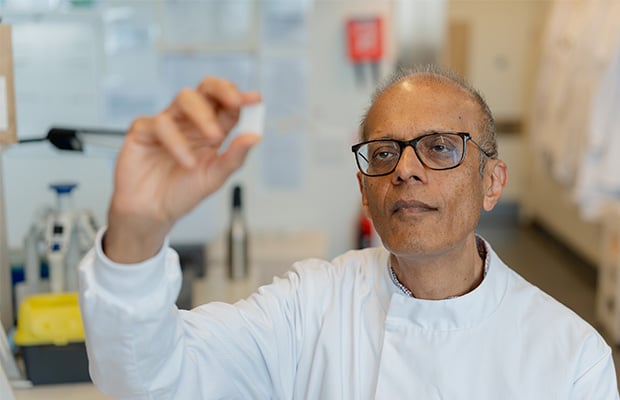
We make thin slices of the donor hearts and keep them in a specially designed storage case, known as a biomimetic chamber.
This mimics the environment of the human body to maintain the slices for days to weeks.
Even outside the body, these slices of the human heart’s natural electrical centre can still ‘beat’.

BHF-funded researcher Dr Alicia D'Souza working with colleague Dr Alice Francis (PhD) in Dr D'Souza's laboratory at Imperial College London.
How are improved tools helping your research?
Looking at these pacemaker cells down a microscope, they’re so intricate, it’s like looking into the stars.
There’s a whole universe in there which is now visible to us thanks to the fantastic resolution of the tools we use for research.
You can't fix something unless you really understand it.
And BHF-funded research is really transforming how electrical system disease is understood.
What to read next...

More information
Understand health
Heart failure stages explained

Understand health
9 signs you might have heart disease
