

Eat well
Does alcohol raise blood pressure?
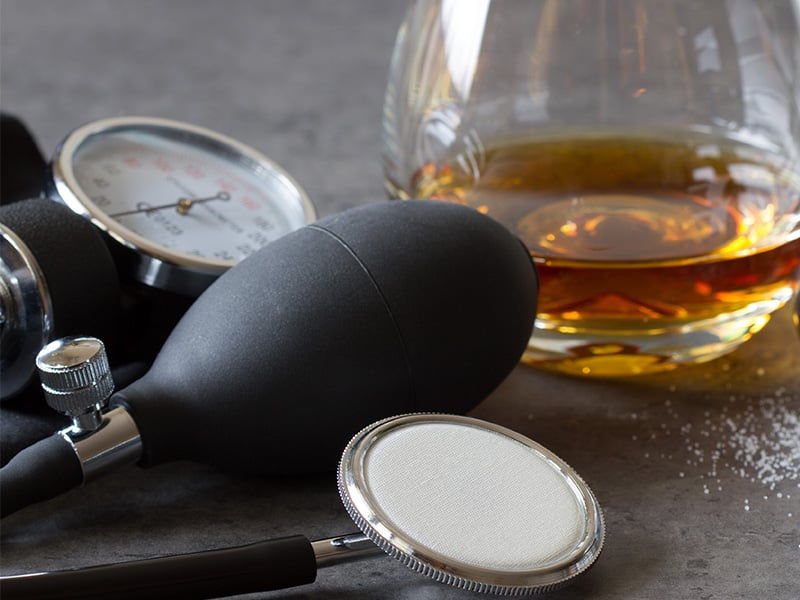
Professor Ian Wilkinson, a University of Cambridge hypertension expert, reveals how new science could change how we think about the causes of high blood pressure, its diagnosis and treatment.


High blood pressure (hypertension) is the main contributor to preventable illnesses like heart attacks, strokes, dementia and kidney disease – making it the single most important factor for avoiding unnecessary premature death and disability worldwide.
In the UK, 1 in 3 adults has high blood pressure, but up to 5 million people do not know they have it because there are no symptoms.
And even though it’s common, we still do not fully understand why most people develop it. That’s why research, like that supported by the British Heart Foundation (BHF), is essential to improving prevention, diagnosis and treatment.
We can only identify a clear cause of high blood pressure in about 10 per cent of cases. We call this ‘secondary hypertension’ as high blood pressure is the direct result of another condition or medicine.
This might be, for example, that someone is producing too much of a hormone that helps regulate blood pressure called aldosterone. For cases such as these, we need better ways to detect and treat them.
But for the remaining 90 per cent of people with high blood pressure, the causes are less clear. We call this ‘primary hypertension’ as it has no direct cause.
We know that lifestyle factors such as eating too much salt, living with excess weight or obesity and drinking too much alcohol is linked with developing this type of high blood pressure. Smoking and not being physically active enough can also impact your cardiovascular risk.
But not everyone with these lifestyle factors develops high blood pressure. So, research is needed to understand exactly how these factors cause high blood pressure, and why they have a bigger effect on some people than others.
This will help us develop more targeted treatments in future.

Hormones are a major focus of interest. We know that adrenal gland growths can lead to too much aldosterone and high blood pressure.
Now researchers are looking into how – even in people who do not have adrenal gland growths – this hormone might cause high blood pressure.
Another area is the role of sex hormones. To answer questions like:
The hormones involved in weight loss and gain are also being explored.
The new hormone-mimicking weight-loss drugs, like Mounjaro and Wegovy, seem to have a beneficial effect on lowering blood pressure.
But they’ve not really been tested as a treatment for people with high blood pressure yet.
There’s also a lot of work exploring the role of genetics.
A very tiny number of people have one clear genetic mutation that causes them to have high blood pressure.
More typical is that people inherit a set of thousands of ‘bad genes’ that together cause them to be more susceptible to factors like eating too much salt or stress.
The role of ageing also needs to be understood.
High blood pressure is strongly linked with age. Only 9 per cent of people aged under 40 have high blood pressure, while for people in their 90s it’s around 90 per cent.
We know the stiffening of arteries is probably behind age-related high blood pressure, but we need to better understand this and what treatments can be used to “unstiffen” them.

Early detection is key. At the moment, we do not know how common it is for children to already have high blood pressure or high-normal blood pressure (sometimes called ‘pre-hypertension’).
Research could show how effective it might be to screen and diagnose secondary school children.
Studies can also tell us what the most effective ways are to educate and help both children and adults to make lifestyle changes to lower their blood pressure or prevent them developing high blood pressure.
There’s a role for government regulation of salt in foods.
We also need to understand how to target hard-to-reach sections of the population, as poorer and ethnic minority groups are more likely to have high blood pressure but are often less likely to access healthcare and are underrepresented in research.
There’s a role for the government here. There could be regulation of salt in foods, similar to seatbelt laws or tobacco restrictions, and research can tell us what impact such regulation can have.
We also need more evidence on whether using ‘low-salt’ substitutes, which are a mix of sodium chloride salt and potassium chloride, are a safe way to lower blood pressure and prevent people developing high blood pressure.

By testing the use of imaging technology in new ways we will better understand why some people are more affected by lifestyle factors that can raise blood pressure than others.
For example, we think the way salt builds up in our skin could be important and so being able to measure skin sodium is useful. But until recently, most techniques for doing this were invasive, meaning research has been limited.
Now MRI imaging technology has been adapted so we can measure skin sodium in a non-invasive way. We can use this to better understand how blood pressure medicines affect skin sodium differently in different people, which should allow us to offer more personalised treatment in future.
80 per cent of blood pressure devices sold online are not medically valid.
Phone apps can help people track how much salt they’re having, how physically active they are and help them to stop smoking or drink less alcohol.
Wearable devices can also help them keep an eye on their blood pressure at home, and nudge people to be more active and eat more healthily.
But there needs to be better regulation. Research has found around 80 per cent of blood pressure devices sold online are not valid, meaning they have not had their medical accuracy proven, or have been shown to be medically inaccurate.
Personalised treatment is the future.
Instead of the current one-size-fits-all approach to prescribing blood pressure medicines, better research will allow doctors to consider factors like hormone profiles, age, sex, ethnicity and genetics.
We know, for most people, if we can get them to keep taking their blood pressure medicine, their blood pressure will come down.
But about 40 per cent of people who come to my clinic are not taking some or all their tablets – and I have some sympathy for them if they’re having to take 10 tablets for different conditions.
New longer-acting twice-yearly injections could help treat high blood pressure.
New ‘polypills’ that combine different blood pressure medications may help reduce the pill burden. And new longer-acting treatments, such as twice-yearly injections could also help.
New drugs are also being developed for resistant hypertension, targeting hormones like aldosterone and endothelin.

Research into resistant hypertension treatments that do not involve medicines is happening too. This includes removing nerves around the kidneys (renal denervation), or using electric stimulation of the vagus nerve, which carry signals between your brain and heart.
But it's still very early days with this and a lot more studies are needed to see if there are long-term benefits.


