Eat well
Can you spot the hidden fats?

Pies are a popular, though rarely heart-healthy, comfort food. But with a few changes even those with heart disease can enjoy them, says Senior Dietitian Victoria Taylor.

Whether it’s chicken and leek pie or a pasty, traditional pastry treats are a popular choice. Sadly, they’re not great as a regular part of your diet.
An average individual meat pie provides around 450kcal, but the biggest problem is the 12g of saturated fat inside it – that’s more than half the daily guideline. If you have buttery mashed potato or chips on the side, the fat content of your meal is even higher.
It’s best to keep pies as an occasional treat. And if you cook them at home, a few simple changes will make them more heart-healthy.
The pastry in the traditional pie is usually the biggest issue for your heart health. A simple way to reduce this is to put pastry on top, but not underneath. This reduces saturated fat per portion by 40 per cent and calories by a quarter. If you make your own pastry, use an unsaturated fat spread rather than butter or lard. This can halve the saturated fat content of your pastry. Most spreads based on vegetable oils will be suitable, but don’t use a low-fat spread (less than 38 per cent fat or 38g fat per 100g) as the higher water content will leave you with tough pastry.
Even better, switch your pastry from shortcrust or puff to filo. This is the lowest-fat pastry by far, with 2.9g fat per 100g. This compares with 26.2g for puff or 31.4g for shortcrust. Filo is the lowest-calorie option too, and it’s easy to use. You can buy it fresh or frozen (defrost first if it’s frozen). Just scrunch up the sheets and place on top of the pie and it crisps up nicely. If you’re comfortable working with filo, you could use it for handheld pastries or samosas, either in a triangle or roll shape. Just make sure the ends are well tucked in so the filling doesn’t leak out.
Crumble toppings are common for sweet dishes but work for savoury pies too. To make your own, use unsaturated spread instead of butter, and try using a bit less of it to reduce the calories (crumble topping tends to be more flexible than pastry). Oats are a nice addition to sweet or savoury crumble toppings. For a savoury crumble, add dried herbs for extra flavour, and if you want to add cheese, choose a reduced-fat version – using a mature or full-flavoured cheese will mean you don’t need as much.
Sliced potatoes are another good savoury topping. Or try a cobbler, which has a sweet or savoury scone topping. Choose your recipe carefully – if it is high in butter you can usually swap for an unsaturated spread.
Mashed vegetables make a great pie topping. Use mashed potato or mix with other veg like parsnip, swede, carrot or cauliflower. These are as comforting and filling as a pastry pie, but with less fat. Mash your veg with milk and unsaturated spread, rather than butter. Do the same if you’re having mash as a side dish.
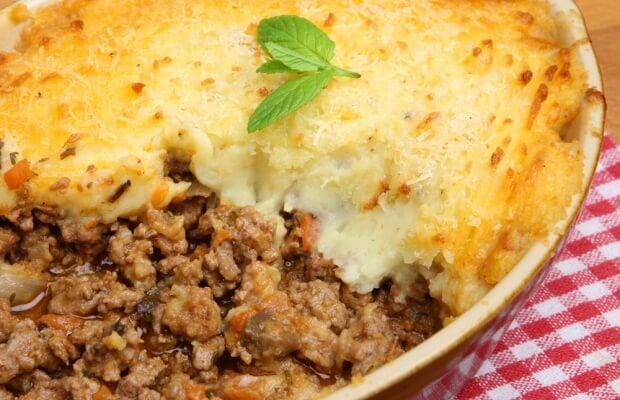
Your pie filling can have a makeover too. If you’re making a meat pie, use lean cuts or extra-lean mince and include plenty of veg. To make your meat go further, mix in tinned lentils or beans. Replacing some of the meat with pulses lowers the meal’s saturated fat content and adds protein and fibre.
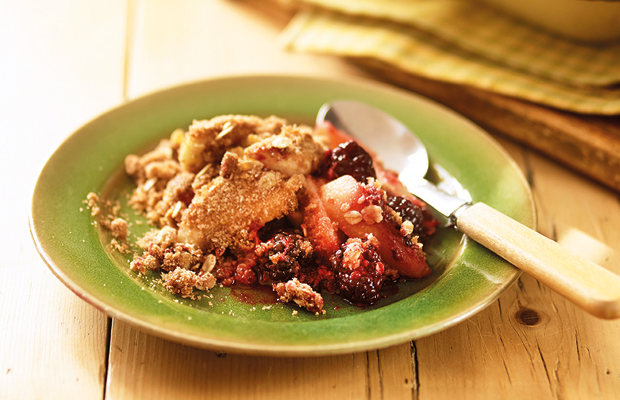
If you are making a fruit pie, taste your fruit before adding sugar. Generally, the riper it is, the less you need. You can also add dried fruit to the filling to sweeten it without adding as much sugar. Ground cinnamon adds natural sweetness – it’s particularly good with apples, bananas, blackberries, peaches and pears.
Pies are high in energy, so keep an eye on your portion size, as you can consume a lot of calories in only a few mouthfuls. Eating it as part of a meal with vegetables on the side can make a smaller portion go further. Having a pie or pasty as a snack is not such a good idea – it is high in calories and you may still eat a normal meal later.
With sweet pies, skip ice cream or cream and go for custard made with low-fat milk (or low-fat no-added-sugar instant custard) or low-fat yoghurt (low-fat Greek yoghurt or skyr are the creamiest options).