Eat well

Full-fat milk: is it good for you?
Is full-fat cow’s milk an important part of a balanced diet – or a source of unhealthy fats that can raise cholesterol? BHF Senior Dietitian Dell Stanford explains whether you should switch to a lower-fat version or dairy-free alternatives.
Page updated:

Page updated:
What is full-fat milk?
Full-fat cow’s milk is also called whole milk, because it has not had any of the fat removed. It typically contains around 3.5 to 4 per cent fat, including a higher proportion of saturated fat than semi‑skimmed or skimmed milk.
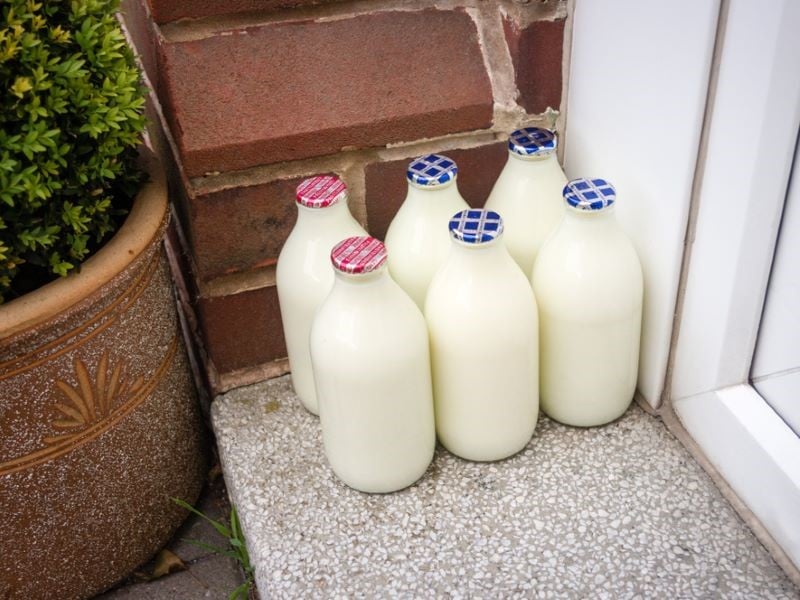
Aside from its fat content, full‑fat milk provides similar amounts of its key nutrients - calcium, protein and iodine - as lower‑fat options. You may also hear it called ‘silver top’ or ‘blue’ milk, referring to the lids on delivery or supermarket bottles.
Jersey or Channel Island milk, sometimes called ‘gold top’, is another type of whole milk. But it’s naturally higher in fat (about 5 per cent), creamier and contains more calories.
Most milk is homogenised, which is when it is forced through very fine holes under pressure to break the fat up into smaller droplets which stay suspended in the milk.
But Jersey milk is often un-homogenised, so you can see the cream layer at the top.
Because of its richer taste and texture, some people prefer full‑fat milk, and it can be enjoyed as part of a balanced diet.
However, it’s worth thinking about how it fits into your overall intake of saturated fat.
Do I need dairy in my diet?
You do not need to eat and drink dairy foods to be healthy. But milk is a nutrient-dense food and it can be a helpful part of a balanced diet.
Dairy products are also one of the more convenient sources of several nutrients, in a form that the body finds easy to absorb.
These are:
- Protein - to support growth and repair.
- Calcium and phosphate - to help keep bones and teeth healthy.
- Iodine - for normal thyroid function, which helps regulate growth and metabolism.
- A range of B vitamins.
For most UK adults, milk is their main source of iodine. A 200ml glass provides around 60mcg, contributing towards the daily requirement of 140mcg iodine.
Milk and dairy foods are also the biggest contributor to calcium intake in UK adults, with a 200ml glass of milk providing roughly 250mg towards the daily requirement of 700mg calcium.
If you do not have milk or other dairy products, you need to get these nutrients from other foods.
Fortified plant-based drinks such as calcium-enriched soya milk can be a suitable alternative.
Other sources of calcium include green leafy vegetables, tinned fish (with bones), almonds and fortified foods.
Iodine can be found in some fortified products, seaweed and some fish.
Which cow’s milk is healthiest?
All types of cow's milk contain very similar levels of calcium, protein and iodine, although full-fat milk will also contain more fat-soluble vitamins (such as vitamin A) than reduced-fat varieties.
The major difference between the different types of cow’s milk is their calorie, fat and saturated fat content:
- Whole milk (blue top) has none of its fat removed.
- Semi-skimmed (green top) has about half of its fat removed.
- 1 per cent fat milk (purple top) sits between skimmed and semi-skimmed in terms of its fat content.
- Skimmed milk (red top) has almost all its fat removed.
So, if you drink or use a lot of milk, and are trying to manage your cholesterol levels or cut calories, it’s sensible to choose one of the reduced-fat options – they provide just the same protein and calcium as full-fat milk.
And if you choose to drink full-fat milk, make sure you’re keeping an eye on your saturated fat intake from other foods like fatty meat and meat products, butter, cream, pastries, biscuits and cakes.
It’s your overall diet that'll impact your cholesterol levels the most rather than individual foods.
Most dairy milks contain about 5 per cent sugars (lactose). These sugars are natural and do not need to be limited in the same way as free or 'added' sugars.
Lactose in milk is kind to your teeth and lower-fat milks are a healthy drink.
How full-fat compares to other milks
Values are shown per 200ml glass.
| Milk type | Total fat (g) | Saturated fat (g) | Calories (kcal) | Calcium (mg) | Sugar (lactose) (g) |
| Skimmed | 0.4 | 0.2 | 68 | 250 | 10 |
| 1% fat | 2.0 | 1.4 | 86 | 248 | 9.8 |
| Semi-skimmed | 3.4 | 2.2 | 92 | 240 | 9.6 |
| Full-fat (whole) | 7.2 | 4.6 | 126 | 240 | 9.4 |
| Jersey | 10.0 | 6.4 | 148 | 240 | 9.6 |
| Goat's (full-fat) | 7.4 | 4.8 | 124 | 200 | 9.0 |
| Lactose-free (full-fat) | 7.2 | 4.6 | 112 | 240 | 9.6 (Glucose and galactose) |
Source: McCance & Widdowson / UK Composition of Foods Integrated Dataset (CoFID)
Is full-fat milk bad for cholesterol?
Full-fat milk contains saturated fat and we know from decades of research that diets high in saturated fat can raise bad LDL cholesterol levels.
UK dietary advice recommends choosing lower-fat dairy and animal foods.
However, the science around milk and dairy foods is more complex than once thought.
Recent reviews of the evidence suggest that dairy foods (regular or low fat) are not linked to increased risk of cardiovascular disease (CVD), and some studies linked them to a moderately lower risk of CVD.
There is a growing body of research that suggests the combination of nutrients and structure within dairy foods - the dairy food matrix - may influence how saturated fat affects the body.
Factors such as fermentation and the components of dairy foods (calcium, protein and bioactive compounds) may help offset some of the expected effects of saturated fat on cholesterol levels.
However, the evidence remains mixed, and choosing lower-fat milk can help if you’re cutting calories or trying to reduce saturated fat.
It’s your overall diet that matters most – no single food determines your cholesterol level.
You do not need to avoid whole milk completely, but swapping to a lower-fat option is an easy step that can support healthy cholesterol as part of a balanced diet.
Is goat’s milk better for you than cow’s milk?
Although goat’s milk is often marketed as a healthier alternative to cow’s milk, the nutritional differences are quite small.
It contains a very similar fat, calorie and nutrient content to cow’s milk, although it’s slightly lower in calcium.
Some people find goat’s milk easier to digest, causing less bloating, possibly because it contains a slightly different type of casein (the primary protein found in milk) than cow’s milk.
But people with a true cow's milk protein allergy are generally advised not to use goat’s milk as an alternative as the proteins are very similar in both.
Rather than being ‘healthier’, goat’s milk is just another option that can fit into a balanced diet.
Remember full-fat goat’s milk is just as high in saturated fat as full-fat cow’s milk, so lower-fat varieties may be the best option.
Is lactose-free milk healthy?
Lactose is the natural sugar found in milk.
Lactose-free milk can be a good option for people who have difficulty digesting the lactose in regular milk because the lactose has already been broken down into simple sugars to make it easier to absorb.
It can taste a little sweeter than regular milk, although the total sugar amount is the same as regular milk.
Nutritionally, lactose-free milk is very similar to regular cow’s milk and reduced-fat versions are available in supermarkets. Goat’s milk also contains lactose and can trigger symptoms in people with lactose intolerance.
Is raw milk good for you?
Raw milk is milk that has not been pasteurised.
Pasteurised milk has been heated briefly, then cooled quickly to kill any harmful bacteria. This process makes the milk safer and last longer.
It does not make the milk sterile but reduces the risk of infections from bacteria, such as E.coli and campylobacter.
Nutritionally, raw milk is similar to pasteurised full-fat milk. Pasteurisation has little effect on key nutrients like calcium and iodine.
Some people believe that raw milk is better for the gut as it contains ‘good bacteria’. Others think it lowers the risk of allergies, that it is less processed or tastes better.
Although this is a matter of choice, be aware that raw milk can contain harmful bacteria as well as good and should not be consumed by certain groups of people who may be at more risk of infection (pregnant women, young children, older or poorly people).
The sale of raw milk is strictly controlled by the Food Standards Agency in the UK, although sales are banned in Scotland due to public health and food safety issues.
Which dairy-free milk alternative is the healthiest?
If you choose non-dairy plant-based alternatives to milk, like almond, oat, pea, coconut, hazelnut, rice or soya, go for those that are fortified with calcium and do not contain added sugar.
Be aware that organic plant milks are less likely to be fortified with calcium than non-organic varieties.
Plant milks are often lower in protein than cow’s milk. Calcium-fortified soya milk is probably most nutritionally similar to cow’s milk in terms of its protein and calcium content.
It’s less common to find plant milks fortified with iodine.
Dairy-free plant milks often contain coconut to improve texture and flavour, and so may not be lower in saturated fat that dairy milk.
Always check the nutrition label and ingredients list.
What to read next...