


Understand health
Which heart symptoms mean I should seek urgent medical help?
You may have been waiting longer than usual for a checkup or appointment, or feel like you're struggling to get an appointment. We explain which heart symptoms are really important to get checked.
Page updated:
Page updated:
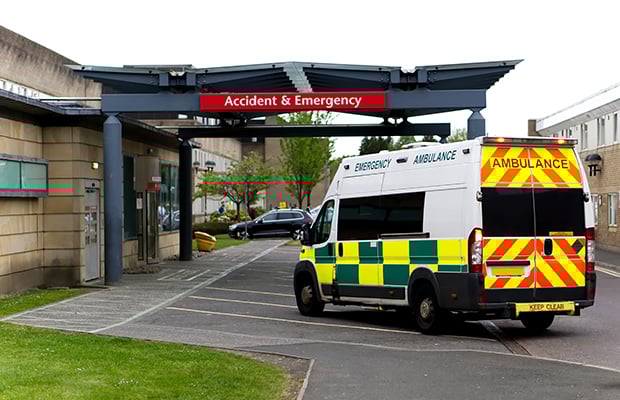
If you experience symptoms that could be a heart attack or stroke, or any of the symptoms listed below where the guidance is to call 999, it's important that you seek medical help immediately by calling for an ambulance.
Don’t delay getting help because you think the NHS is too busy, or because you've had trouble getting an appointment. If you delay, you are more likely to suffer serious damage and more likely to need intensive care and to spend longer in hospital.
You may have read that some ambulance services have been experiencing delays in responding to calls. Despite this, it's still better to call 999 first rather than just going straight to hospital. An ambulance may be more appropriate for a few reasons:
- ambulance crews are trained to give certain emergency treatments and run important tests. One test, called an ECG, can tell them whether you are having a heart attack
- depending on your ECG result, paramedics could take you to the right specialist unit for your type of heart attack, increasing your survival chances
- finally, if your heart were to stop pumping on the way to hospital, the ambulance crew would attempt to resuscitate you then and there.
Remember, the NHS has systems in place to treat people who need urgent heart or stroke treatment. That said, if the call handler thinks that you should do something different rather than wait for an ambulance, they will also be able to tell you.
Signs that you need to seek emergency help:
- Sudden pain or discomfort in your chest that does not go away
- Pain that spreads to your right or left arm, neck, jaw, back or stomach
- Suddenly feeling sick, sweaty or light-headed
- Swelling of feet, ankles or lower legs
- Weight gain over a short period of time
- Shortness of breath
- If you already have a diagnosis of heart failure
- Facial weakness
- Speech problems
- Signs of a stroke
- Sudden memory loss or confusion, and dizziness or a sudden fall
- Sudden severe headache
- Sudden sight problems
- Weakness or numbness on one side of the body
- Fainting or blackouts
- Heart palpitations
Sudden pain or discomfort in your chest that does not go away
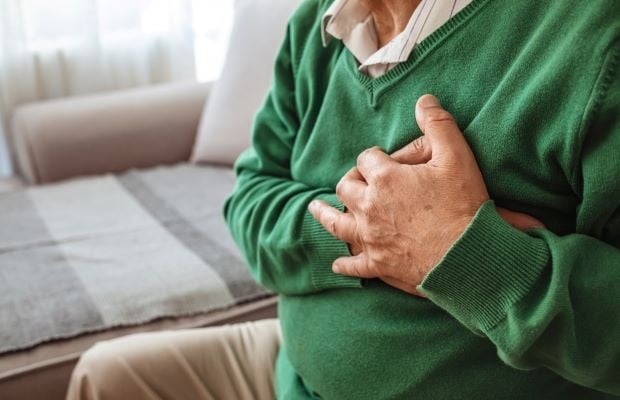
If you start to feel a sudden pain or discomfort in your chest, call 999 immediately. This can be a symptom of a heart attack, and it’s vital that you seek medical help without delay.
It’s important to remember that discomfort can be felt in different ways. For instance, you may feel a sensation of pressure, tightness or squeezing in the centre of your chest.
Pain that spreads to your right or left arm, neck, jaw, back or stomach
This can be another symptom of a heart attack, and it is important that you call 999 for medical help immediately. For some the pain or tightness is severe, while for others it’s uncomfortable.
Suddenly feeling sick, sweaty or light-headed
These can be symptoms of other less-serious conditions, such as food poisoning or panic attacks, and can pass quickly. However, they can also be a symptom of a heart attack. If you experience a new and sudden feeling of sickness, sweatiness or light-headedness it is important you call 999 straight away
Increasing swelling of feet, ankles or lower legs
Increasing swelling below your knees can be a sign of heart failure. This symptom occurs because your heart is not able to pump blood around the body efficiently, leading to fluid retention.
Increasing swelling below your knees can be a sign of heart failure.
If you notice this swelling, make an appointment with your GP to discuss, so you can be assessed and tested as needed. Many of these tests can be done at the GP surgery, so it’s unlikely you will need to go into hospital. It’s important that you see your GP straight away, as delaying any treatment risks your symptoms getting worse.
Weight gain over a short period of time
If you have been diagnosed with heart failure, it is important to weigh yourself regularly. Any sudden weight gain may suggest too much fluid is building up in your body and could be a sign that your condition is worsening or that you may need your medication adjusted.
Although many people are finding themselves putting on weight while in ‘lockdown’, it’s still worth making a note of any weight gain you notice. If you notice a sudden weight gain of more than two or three pounds in a 24-hour period or more than five pounds in a week, phone your GP or healthcare provider.
Shortness of breath
There are a number of causes for shortness of breath – but it can be a sign of heart failure. This can be experienced while you’re being active – for instance walking or climbing stairs – or while you’re sitting down or lying flat in bed.
There are a number of causes for shortness of breath – but it can be a sign of heart failure.
If you experience shortness of breath or notice any worsening in your ability to do your regular activities, make an appointment with your GP to discuss your symptoms.
If you find yourself waking up from sleep struggling to breathe, or even coughing up frothy sputum - a mixture of saliva and mucus – then you should dial 999 immediately as this can be a sign that you are in pulmonary oedema.
If you already have a diagnosis of heart failure
If you or someone you are caring for is living with heart failure, and any of these happen, urgent help is needed - call 999:
- the person is struggling to breathe
- or collapses
- or is in distress
- or faints or blacks out
- or experiences sudden chest pain or discomfort that doesn't go away.
If you have heart failure, tell your family, friends or carers that they should call 999 if any of these happen to you.
Facial weakness
Can you smile? Has your mouth or eye dropped? Facial weakness can be a symptom of a stroke, and so it is vital that you call 999 immediately for urgent medical help.
Speech problem
Can you speak clearly, or are you having difficulty finding words or speaking in clear sentences? These symptoms could be a sign that you are having a stroke. Act quickly by calling 999 straight away.
Sudden memory loss or confusion, and dizziness or a sudden fall
You need urgent medical help if it’s a sudden memory loss or confusion that’s not related to a condition you (or the person you’re caring for) already have. It’s important to note that these symptoms can be caused by other conditions, and if they’re not sudden they may not need to be treated urgently.
But if the memory loss or confusion is unusual and sudden, it could be an emergency such as a stroke. Seek medical help by calling 999 immediately.
Sudden severe headache
A severe headache can be caused by many things, but if it comes on quickly and suddenly, it could be a sign of a stroke. A stroke headache can also be associated with the loss of sensation, such as vision or feeling, but not always. Call 999 for medical help.
Sudden sight problems
Sight problems can refer to anything from blurred vision to the loss of sight in one or both eyes. Experiencing any of these suddenly can be a sign of a stroke. Don’t delay – call 999 immediately.
Weakness or numbness on one side of the body
If you experience a sudden weakness or numbness on one side of the body, call 999 straight away as you may be experiencing a stroke. This sudden weakness or numbness can be felt anywhere in the body, including in the legs, hands or feet.
Fainting or blackouts
Around 40 per cent of people faint at least once in their life, but it’s usually not dangerous. However, if you are worried about your fainting or blackout episodes, then you should make an appointment with your GP. They will be able to diagnose or rule out any medical problems, such as an abnormal heart rhythm.
It may be possible for a heart rhythm monitor – known as a Holter monitor or ambulatory ECG monitoring - to be sent to you to avoid you having to go into hospital. This is worn for at least 24 hours and can be for up to a week and monitors your heart rhythm throughout. This can help your medical professional diagnose any problem with your heart.
What to read next...
Where to get medical help if your appointment is delayed or cancelled

More useful information
Understand health
Chest pain: what are the common causes?
Understand health
Understanding aspirin and heart attack
