Get active
Warm-up exercises: 15-minute routine

Cooling down after exercising lets your heart rate and blood pressure come down slowly, helping to stop you feeling dizzy. Cardiac rehab expert Hara Markos shares a 10-minute easy to follow routine.



If you've just completed a workout, it may be tempting to sit down as soon as you finish.
However, when you exercise, your heart rate and blood pressure can climb higher than normal. So, if you stop suddenly, they may drop too quickly, leaving you feeling dizzy or lightheaded.
Adding a cool-down to the end of your workout keeps blood flowing around your body. This helps to bring your blood pressure, heart rate and breathing rate down gradually.
If you have a cardiovascular disease, such as angina, heart failure or an abnormal heart rhythm (arrhythmia), and have no limits to your exercise, you should try to cool down for at least 10 minutes after exercising.
Doing a cool-down routine will also help your body flush out a waste product called lactic acid that can build up in the muscles during exercise causing stiffness.
You should start your cool-down routine at the same intensity you were working at during your exercise workout.
This will probably be a moderate intensity, where you are a little out of breath but still able to comfortably talk.
By the end of your cool-down routine, you should be at a light intensity, which means you’ll feel slightly warmer than normal, but still able to easily hold a conversation.
Exercise specialists use the BORG rate of perceived exertion scale from 6 to 20 to work out how intensely you should be exercising. You may have used if you’ve been through cardiac rehabilitation.
According to the BORG scale:
This cool-down routine contains 5 rounds and lasts around 10 minutes.
For the first round, you’ll be performing full body exercises with both upper and lower body movements.
After that, each round will be slightly less intense. We’ll also add some stretches in round 4 to increase flexibility.
Try not to stop moving between rounds or while you’re stretching. Gently march on the spot to stop your heart rate from dropping in between exercises.
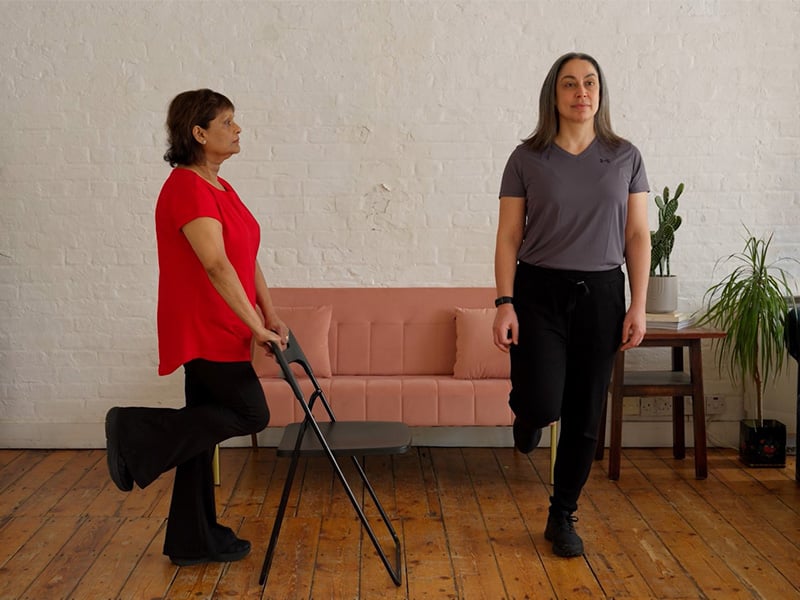
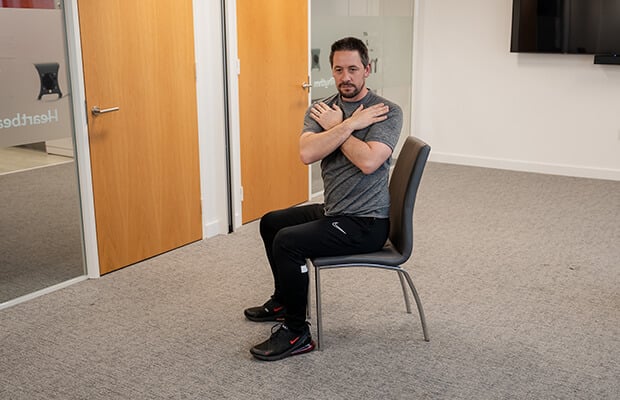
You can do each exercise either standing up or sitting down. You can also hold onto a stable surface like a wall or sturdy chair for balance if you need to.
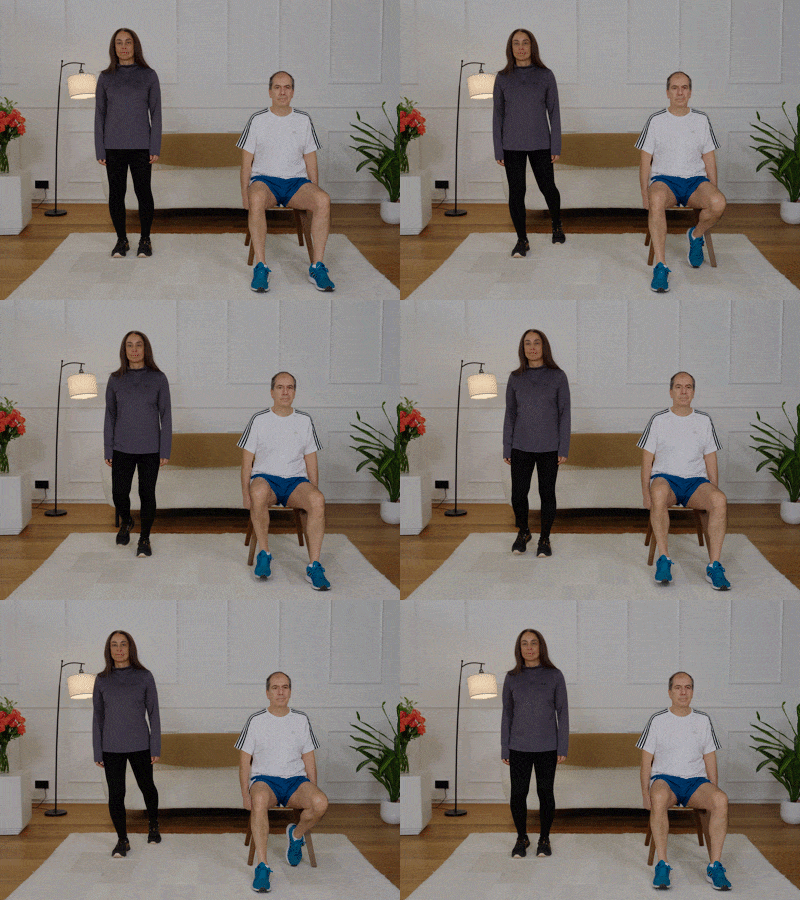
I’ll be demonstrating each exercise standing up, while Stefano, who has been through cardiac rehab, will show you how to do them sitting down.
Stop immediately and contact your doctor if you feel unwell, very short of breath, chest pain, dizziness or heart palpitations.
For the first round, try these 4 exercises with upper and lower body movements.

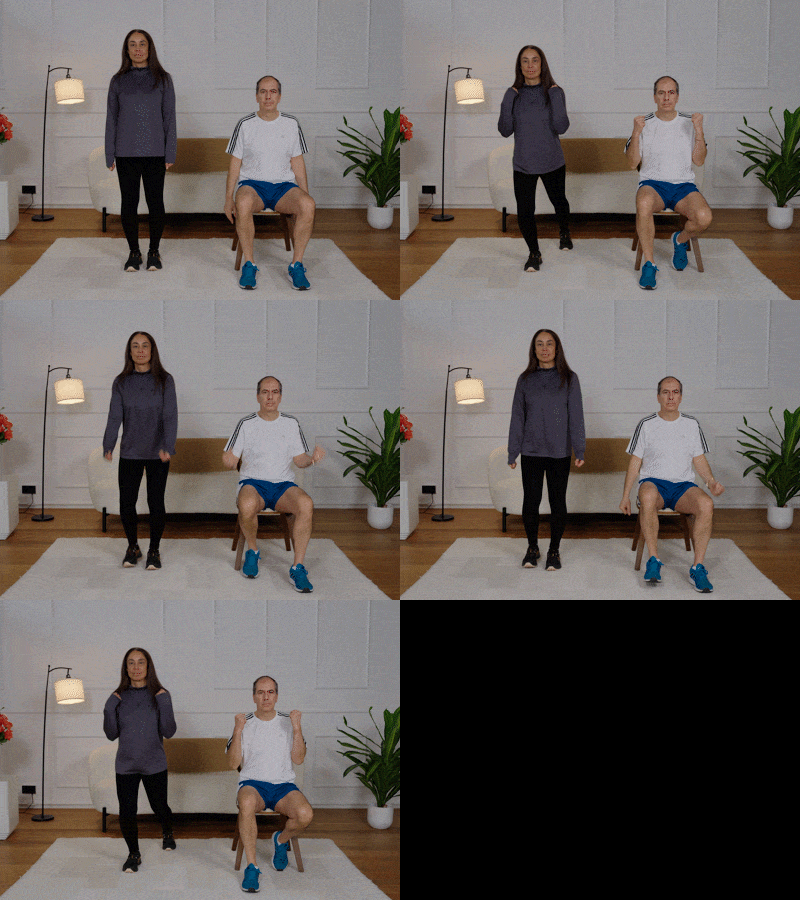

In this round, you’ll perform the upper body movement with 1 arm at a time.


Keep lightly marching on the spot as you stretch to keep your heart rate and blood pressure raised.


For your final round, perform these lower body movements at a slow, steady pace. Keep your arms still, either by your side or on your hips.