


Eat well
35 easy healthy vegan meal recipes

Eating protein does not have to mean eating meat, and there's growing evidence that replacing animal proteins with more plant-based proteins can benefit your health. These vegetarian foods are high in protein and heart-healthy too.
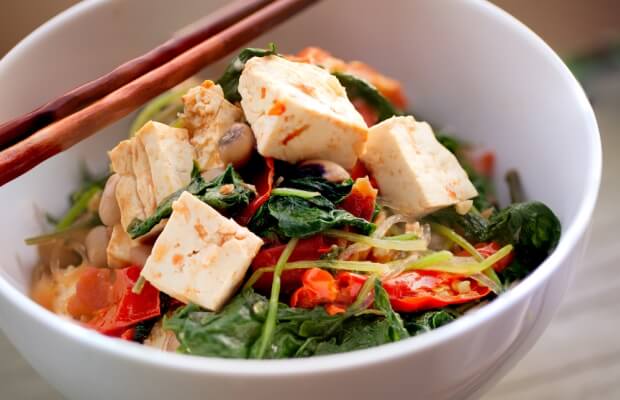
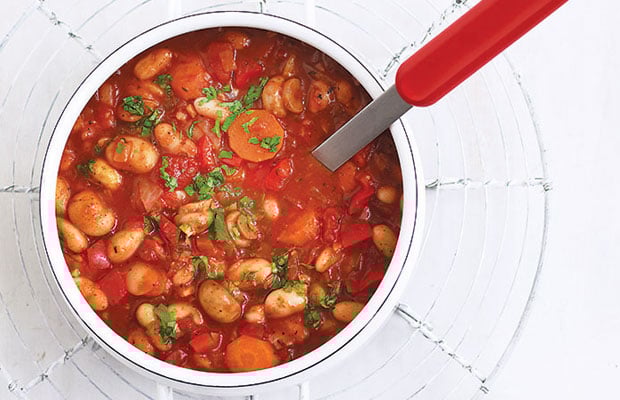
Pulses are an inexpensive protein choice, are high in fibre and a source of iron. They are part of the legume family and include all beans, peas and lentils. A daily serving helps to lower your cholesterol level and counts toward your 5-a-day. If you buy tinned pulses, check the label and choose ones that have no added salt or sugar. They are easy add-ins to sauces, soups and stews, even if they’re not used in the original recipe.
Try our chunky vegetable and bean goulash.
.jpg?rev=efbe489a981d4c608f872510b2b71e14&hash=342ADDA04C1F469F090D40CE49724FF6)
Unlike other pulses, soya beans are a complete protein, comparable in quality with animal protein, but are low in fat and contain fibre and iron. Eating 25g of soya protein a day, instead of meat, can help lower cholesterol levels. This is equivalent to a glass of soya milk, a pot of soya yoghurt or an 80g serving of tofu.
Try our spiced tofu and carrot burgers.

Quinoa is cooked and eaten like a grain, but is actually a seed of a green vegetable related to chard and spinach. It is a good protein food, but it’s not the amount that is impressive, it’s the type. Unlike cereals, quinoa has all of the essential amino acids you find in animal protein. It is an easy substitute for rice and pasta.
5 tbsp (185g) of cooked quinoa contains 8g of protein
Try our sweet potato and quinoa Buddha bowl.

Nuts provide a good dose of protein in a handful and are packed with fibre. Although they are high in fat, and hence calories, most of this fat is heart-healthy unsaturated fats. But stick to a handful per day (30g).
Read our expert's view on nuts as a healthy snack.
.jpg?rev=c8788d694def4dec979912ae88153e05&hash=89E86C543A9724B1173405184DDF336D)
Like nuts, seeds contain healthy unsaturated fats and protein. They can be easily added to a salad, pasta, breakfast or you can eat them plain as a simple snack.
Looking for a range of vegan recipes to add to your weekly rotation? Have a look at our list of 35 easy vegan recipes.
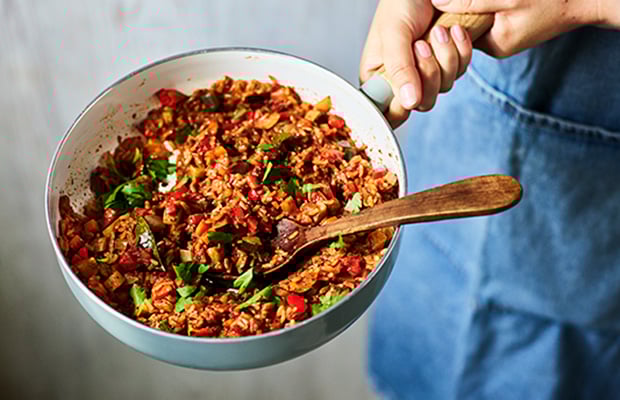
Wholegrain breads, rice and pasta have more protein, fibre and iron than white versions. Brown rice with beans, or bread with hummus or nut butter, can give you as much protein as a piece of meat.
Try our vegan jambalaya made with wholegrain rice.
.jpg?rev=a8cca3dc44d04b5f8815ac07d665e8f2&hash=23AE774C7FC5268B5D5619AB5C4B1242)
Milk, yoghurt and cheese are great sources of protein and also contain calcium to keep our bones healthy. Choosing lower-fat dairy options will help reduce your saturated fat intake without compromising on protein or calcium.
Read our guide to cheese: the good, the bad and the ugly.
.jpg?rev=a42e1235dc6e47f88e59bed2dfac7a45&hash=4342D6366F0A66D19E427767C4D1B382)
It’s a myth that eggs are bad for your heart. Eggs do contain cholesterol, but it’s saturated fat that you need to worry about in terms of blood cholesterol levels. Eggs are low in saturated fat and good sources of B12 and vitamin D. There is no limit to how many eggs you can eat, but if you have familial hypercholesterolemia then talk to your doctor or dietitian for advice about your intake.
How much do you know about eggs? Take our quiz to test your knowledge.


