Conditions
Women and heart disease

Michelle had heart surgery in her 20s. Gradually she's learned to view her scar as a sign of bravery.

Michelle Houston discovered she had a heart condition aged 23. She was a jet-setting air hostess with a love of exercise, so it was a total shock when, one evening in February 2011, she had to be rushed to hospital. She’d had a transient ischaemic attack (TIA), also known as a mini-stroke.
Tests revealed Michelle, now 33, had an atrial septal defect (‘hole in the heart’) and partial pulmonary venous connection defect (where veins carry blood from the lungs to the wrong side of the heart). Surgery was scheduled for summer that year.
“I put it to the back of my mind and didn’t really think about it,” says Michelle, who lives in Inverclyde, Scotland.
“At first, I thought I was going to have keyhole surgery, so I was thinking: ‘That’s ok, I don’t need to worry about having open heart - it can't be that serious.' But when Hamish Walker, the Consultant [at the Golden Jubilee National Hospital], told me that I needed to have open heart surgery, I was in absolute shock and disbelief.”
Surgeons told Michelle they’d open her breastbone, but try to minimise scarring. Focused on surgery, she wasn’t too worried. But when the dressing on her chest was removed, Michelle was shocked by the scar.
“It did affect me emotionally, especially at the start, because I was quite frail,” she says. “I ended up very skinny because of the surgery and the stress, so I think you noticed [the scar] more.”
It was just something I had to deal with myself and get used to the fact it was never going to change
Michelle experienced complications related to the wires holding her breastbone together and needed a second procedure to remove them, which set back her recovery.
However, only four months after surgery, she held a coffee morning and raised more than £2,500, half of which went to the BHF (the rest was split between Golden Jubilee National Hospital and Inverclyde Royal Hospital Cardiology Department).
As Michelle recovered her strength, she tentatively began to exercise. She took up running again in the year after her surgery and has done half-marathons for the British Heart Foundation.
“Once I got back to exercise, there was no issue at all,” she says. Michelle also loves weight training and the strength workout programme, CrossFit.
While her physical recovery progressed, Michelle was still coming to terms with her scar. She experienced keloid scarring, where part of the skin becomes lumpy.
“It was really hard because a lot of people just stared,” she explains. “I’d do anything I could to cover it up and I pretty much stayed in the house for the first couple of months to deal with it.”
Michelle saw a psychologist for a while, but time and the support of her partner, Matthew, and family made the biggest difference. They all view her scar as a sign of bravery. “It was just something I had to deal with myself and get used to the fact it was never going to change. It's what makes me 'me' and is the reason I am here today.” she says.
Now, Michelle feels great, physically and emotionally. She got married to Matthew in May 2015 (she’s now Michelle Sharkey). She still loves keeping fit, and does CrossFit five days a week, open water swimming and climbing and hiking up mountains.
Her experiences also inspired a change of career. Michelle says: “I Being a cardiac patient can be one of the most frightening experiences anyone can have. After my recovery and surgeries I felt I needed to give back to people in the same position or similar situation as me and decided to retrain and go to university to become a NHS Staff Nurse.” She started her nursing career as a cardiothoracic intensive care nurse in the same hospital where she’d had her surgery.
“Be brave,” is Michelle's advice to others. “Afterwards, don’t be worried about your scar. Just be proud and know that you’ve won the battle.”
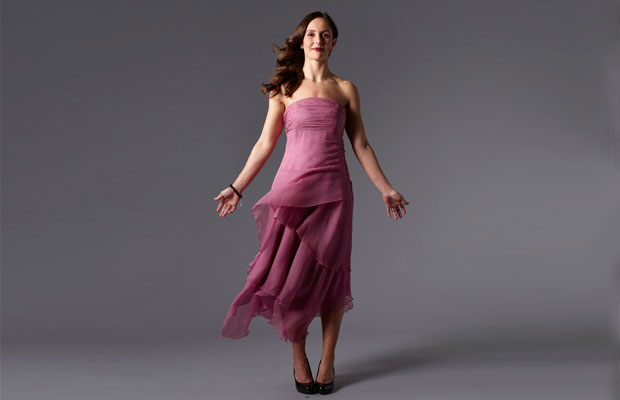
Michelle wears:
Research: The cost of this outfit (£29.97) would help us cover vital lab costs. Find your local shop.
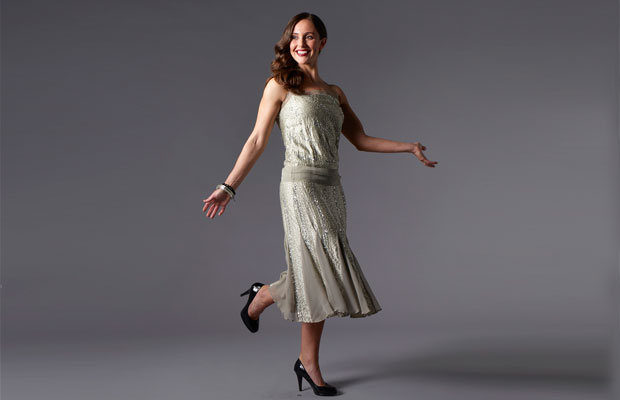
Michelle wears:
Research: The cost of this outfit (£34.99) could fund one hour of a young scientist’s time. Find your local shop.