

ECG
An electrocardiogram, or ECG, is a simple and useful test which records the rhythm, rate and electrical activity of your heart.
There are many different tests for diagnosing or managing heart conditions. Here we explain some of the more common ones and tell you where to find out more.
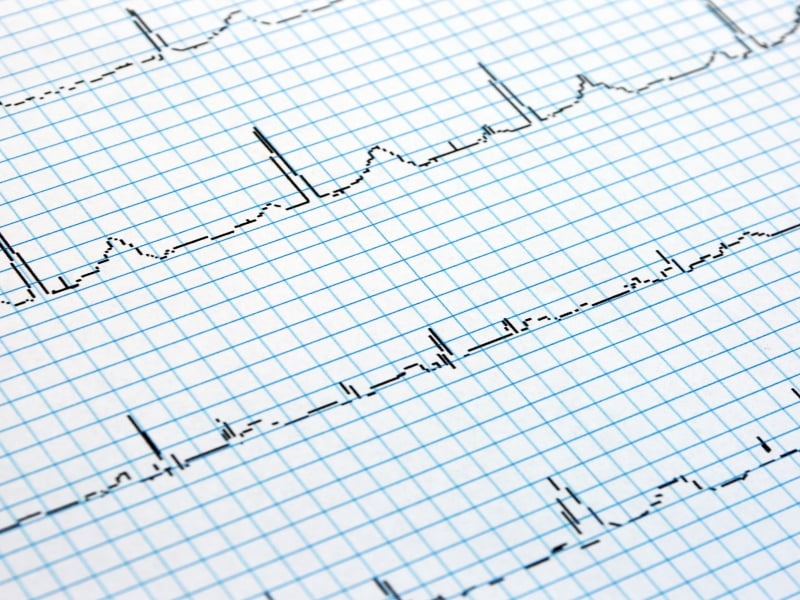
An electrocardiogram, or ECG, is a simple and useful test which records the rhythm, rate and electrical activity of your heart.
You can tell if you have an irregular heart beat by checking your pulse.
An angiogram is a type of X-ray which uses a special type of liquid, called contrast dye, to look at your coronary arteries (the tubes which carry blood to your heart).
Blood tests are a very common way for healthcare professionals to assess your health.
Magnetic Resonance Imaging (MRI) is a way of creating detailed images of your internal organs. Cardiac MRI uses an MRI machine to look specifically at your heart and surrounding blood vessels.
A chest X-ray produces an image of your heart, lungs, airways, and ribs.
Computerised tomography (CT) scanning can be useful to help diagnose heart problems and how severe they are.
An echocardiogram, also known as an ‘echo’, is a test which uses sound waves to help diagnose and monitor certain heart conditions.
An electrophysiological (EP) study is a test which looks at your heart's electrical activity in more detail compared to an ECG.
An exercise ECG aims to see how your heart works when you are doing a physical activity.
Genetic testing can be used to find out whether you have a specific altered gene or a genetic fault which can lead to an inherited heart condition.
An implantable loop recorder, or ILR, is a small device that records the electrical activity of your heart.
These scans use a small amount of radioactive substance to show blood flow to the heart muscle.
If you're having dizzy spells or have blacked out, a tilt test can show if these symptoms are related to your blood pressure or heart rate.
Our Heart Helpline is open Monday to Friday, from 9am to 5pm.
Our free booklets make it easier to understand heart and circulatory diseases.
Read more about the range of treatments available for heart and circulatory conditions.